




Testing
Multishield® Faraday Performance
SLNT® Faraday Material (Multishield®) Third-Party Testing
No matter what you are using, say a dedicated laptop, phone, tablet or hardware wallet, you are susceptible to digital threats. SLNT® exists as the premier solution for patented Faraday cage sleeves that block wireless signals in any situation. Allowing the user to have complete security over their digital financial assets from the minute they leave their door, to when they need to access their assets.
READ MORE+


OUR TESTING PROCESS
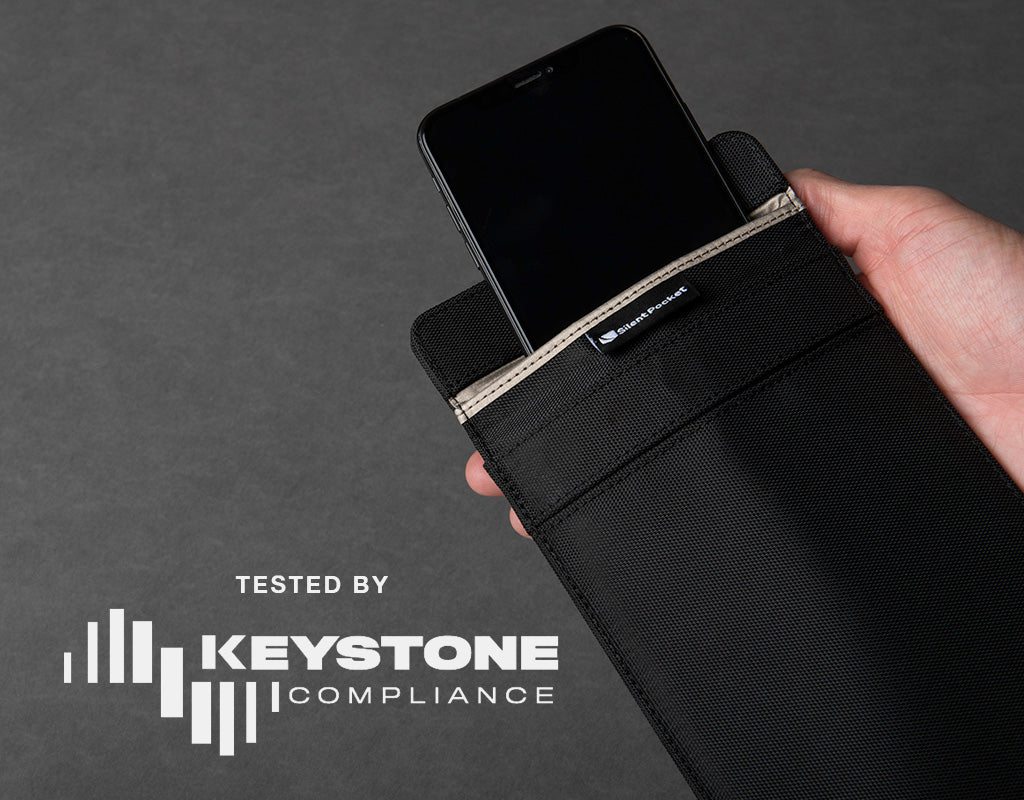
THIRD-PARTY TESTED We partnered with Keystone Compliance, to ensure that we have the most accurate results. Keystone Compliance is an award-winning independent test lab.




THE RESULTS
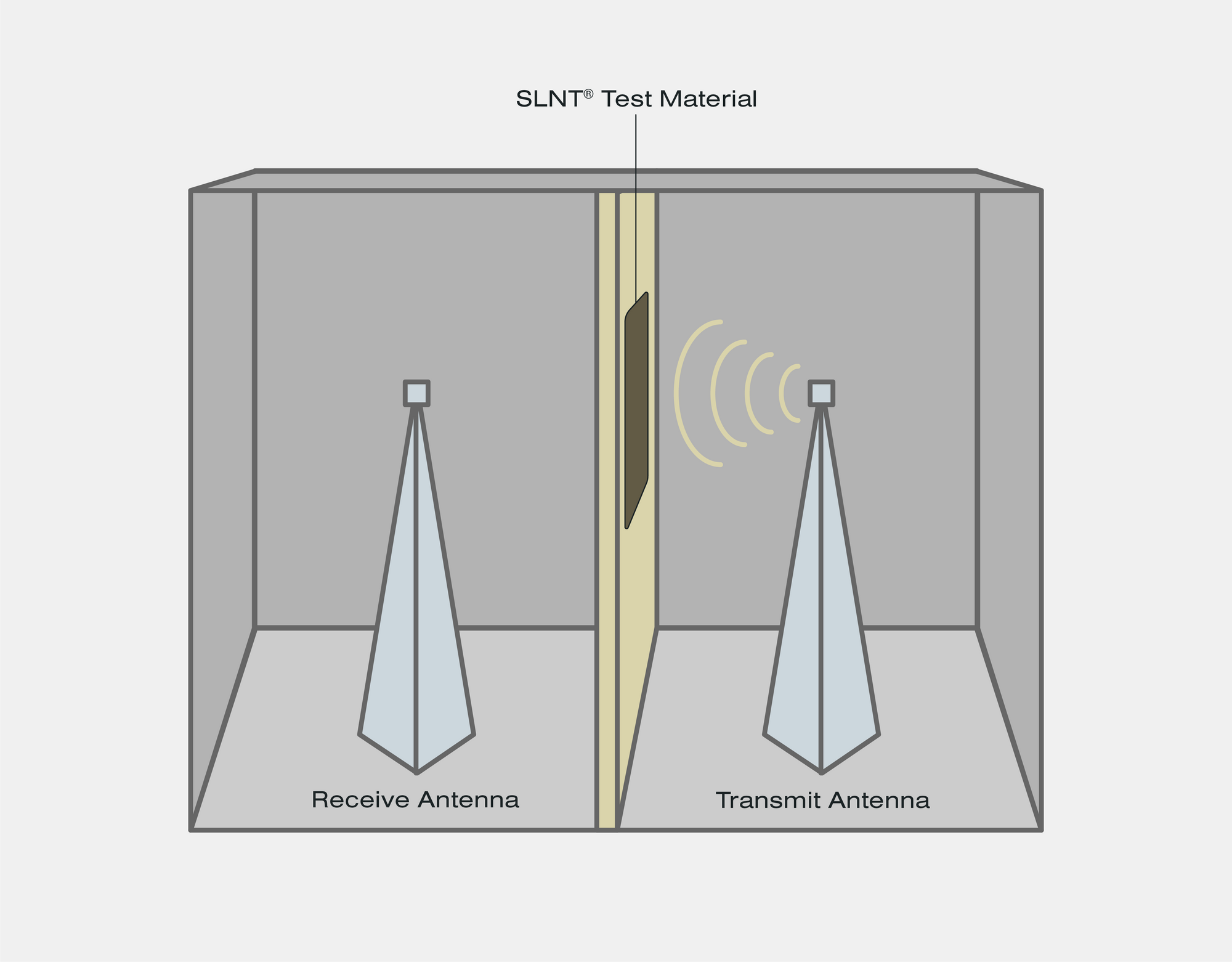
Three reports from Keystone Compliance, an independent test lab. Each one tested a flat sample of Multishield® material.
| Material tested | Method | Frequencies | Reported result | Report pages |
|---|---|---|---|---|
| Multishield®, three layers | MIL-STD-188-125-2 (Report 2106-125EB) | 10 kHz to 1 GHz | Compliant. Results are shown as a graph; the report gives no dB values in its tables. | p. 2, 4, 5 |
| Multishield®, single layer | IEEE 299-2006 (Report 2203-117EB-2) | 1 to 40 GHz, measured every 1 GHz | Pass. 79.8 to 94.9 dB across the 40 measured frequencies. | p. 7, 8 |
| Multishield® USA Berry Compliant, single layer | IEEE 299-2006 (Report 2203-117EB-1) | 1 to 40 GHz, measured every 1 GHz | Pass. 56.8 to 83.9 dB across the 40 measured frequencies. | p. 15, 16 |
What these results cover. Each lab report tested a flat sample of the material in a test fixture. None of them tested a finished bag with its closure and seams. The results show how the material performed under each method. They are not an automatic rating for every SLNT® product, because a finished product also depends on how it's built and closed.

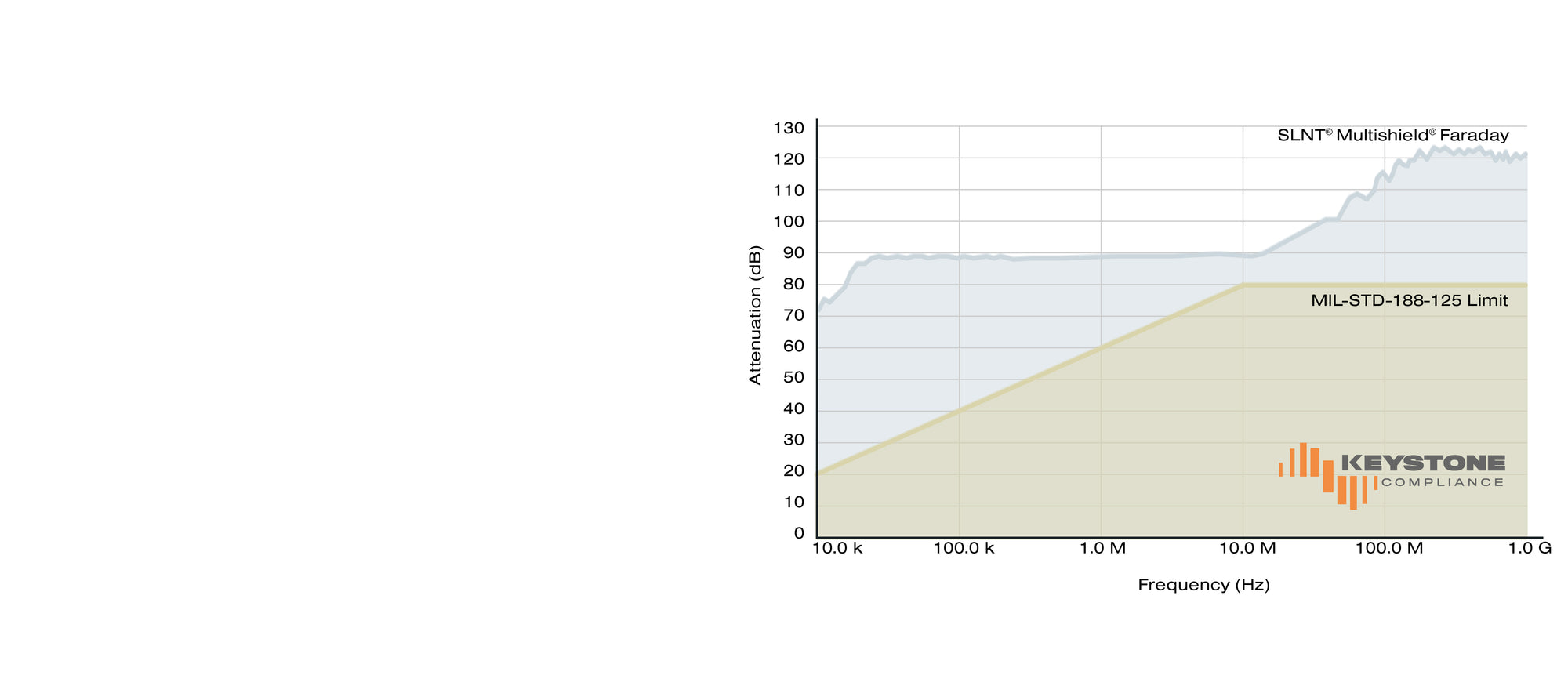

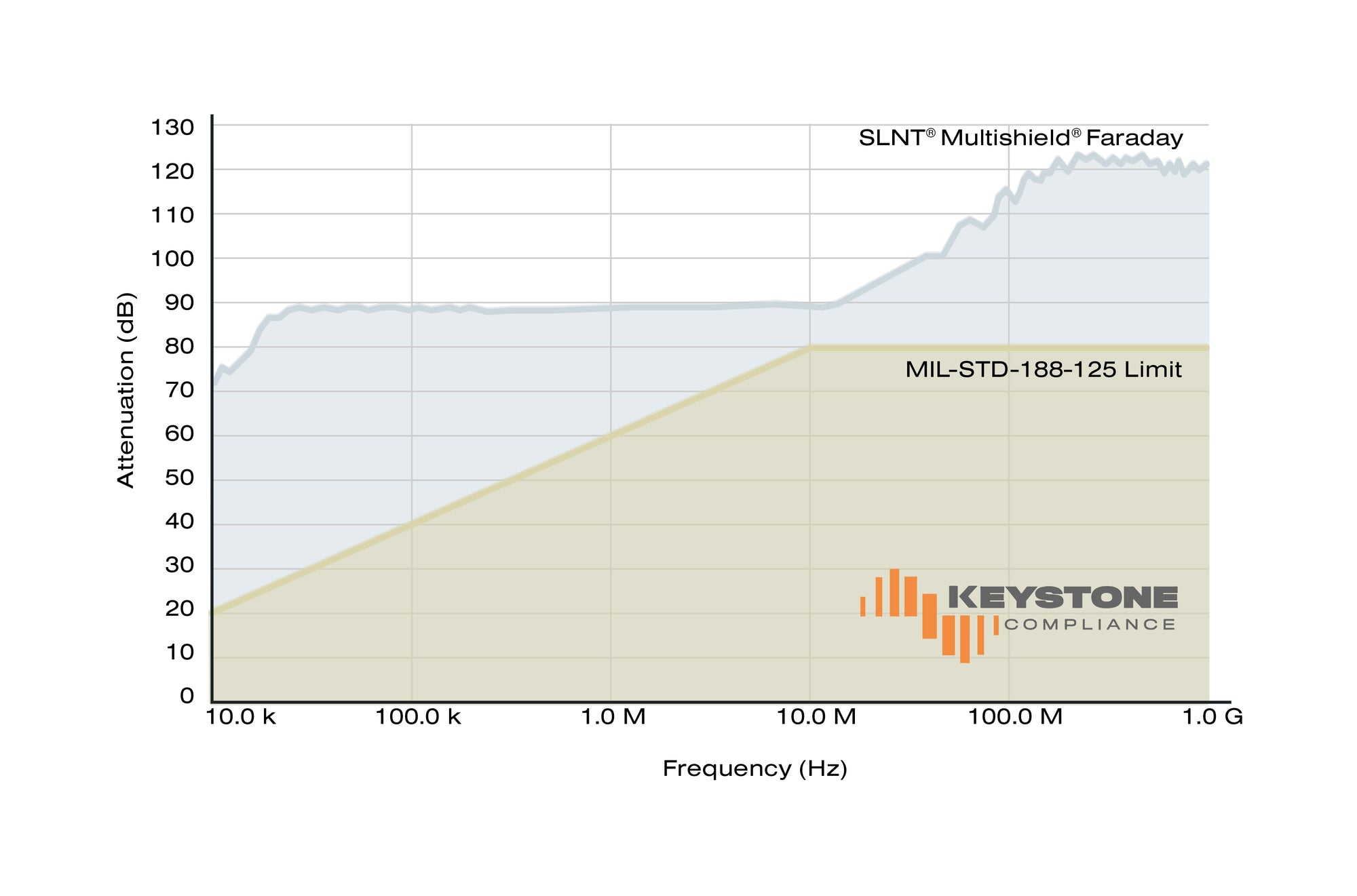
From Keystone Compliance 3rd party testing
shielding
eFFECTIVENESS GRAPH

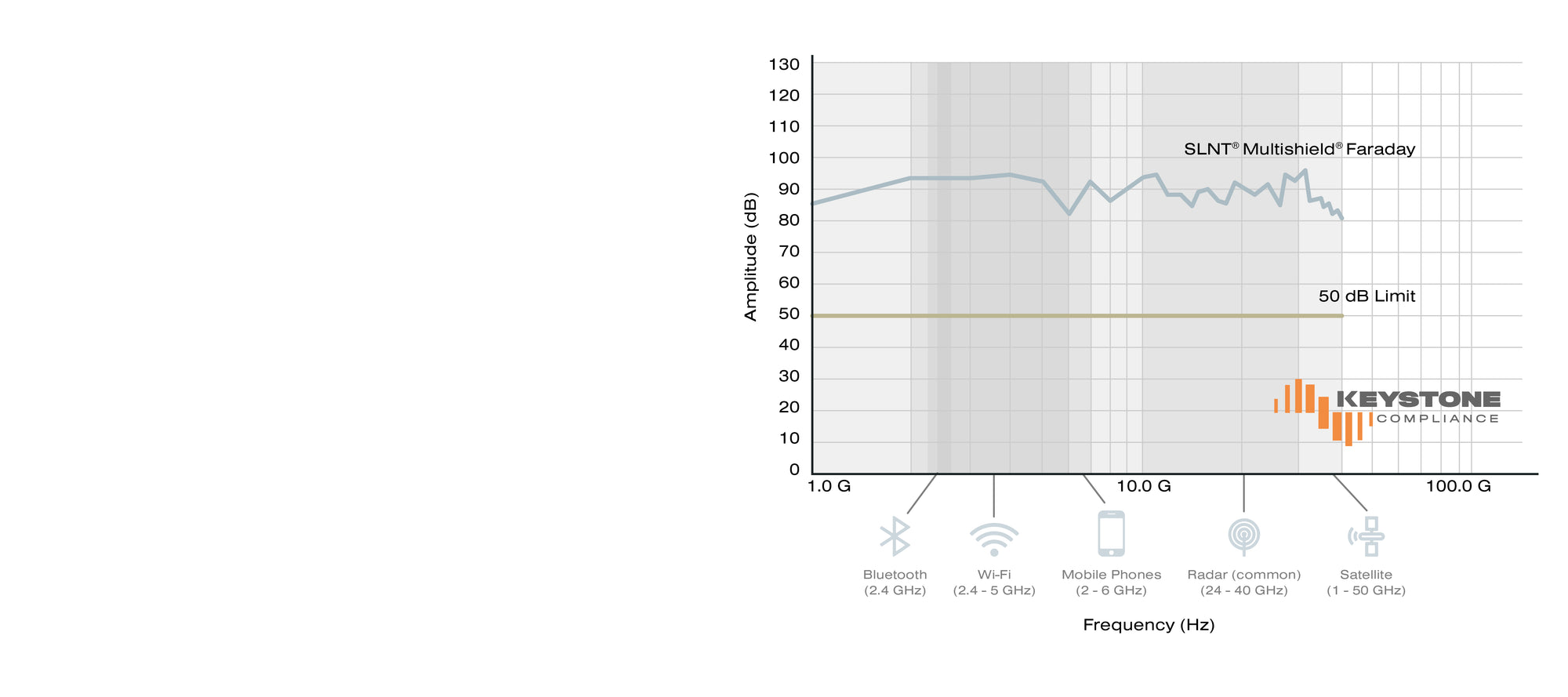

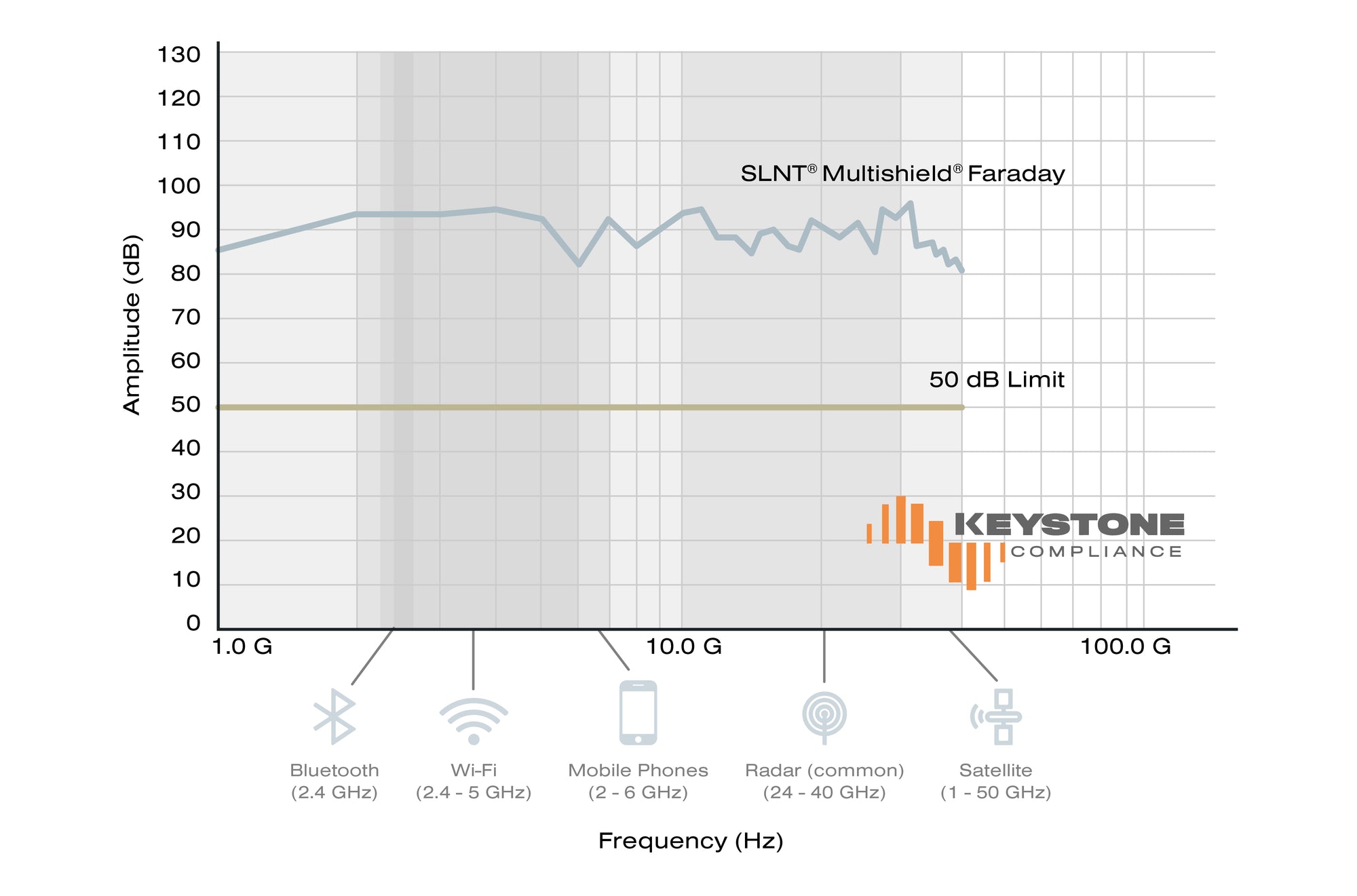
From Keystone Compliance 3rd party testing
HIGH FREQUENCY
eFFECTIVENESS GRAPH


A separate demonstration, not part of the lab reports above. A 750 milliwatt VHF transmitter at 160 MHz goes inside a finished SLNT® bag while a spectrum analyzer (10 kHz to 24 GHz) watches for signal. Setup details are on page 23 of the report.
COMPLIANCE


MIL‐STD‐188‐125‐2
MIL-STD-188-125-2 is a military standard that outlines the criteria for testing the shielding effectiveness of electronic components and systems. This standardization assesses the capacity of electronic components and systems to safeguard against the effects of electromagnetic interference (EMI). EMI can cause errors in data transmission, degrade system performance, and potentially trigger system failure.


IEEE 299-2006
The IEEE 299-2006 (1 - 40GHz) standard assesses the shielding effectiveness of materials. It provides a methodology for conducting tests evaluating the amount of electromagnetic interference (EMI) entering or leaving electronic devices. The Institute of Electrical and Electronics Engineers (IEEE) established this standard. It determines the protection level provided by shielding material against EMI.






Real-World Tested
By the most elite agencies in the world.