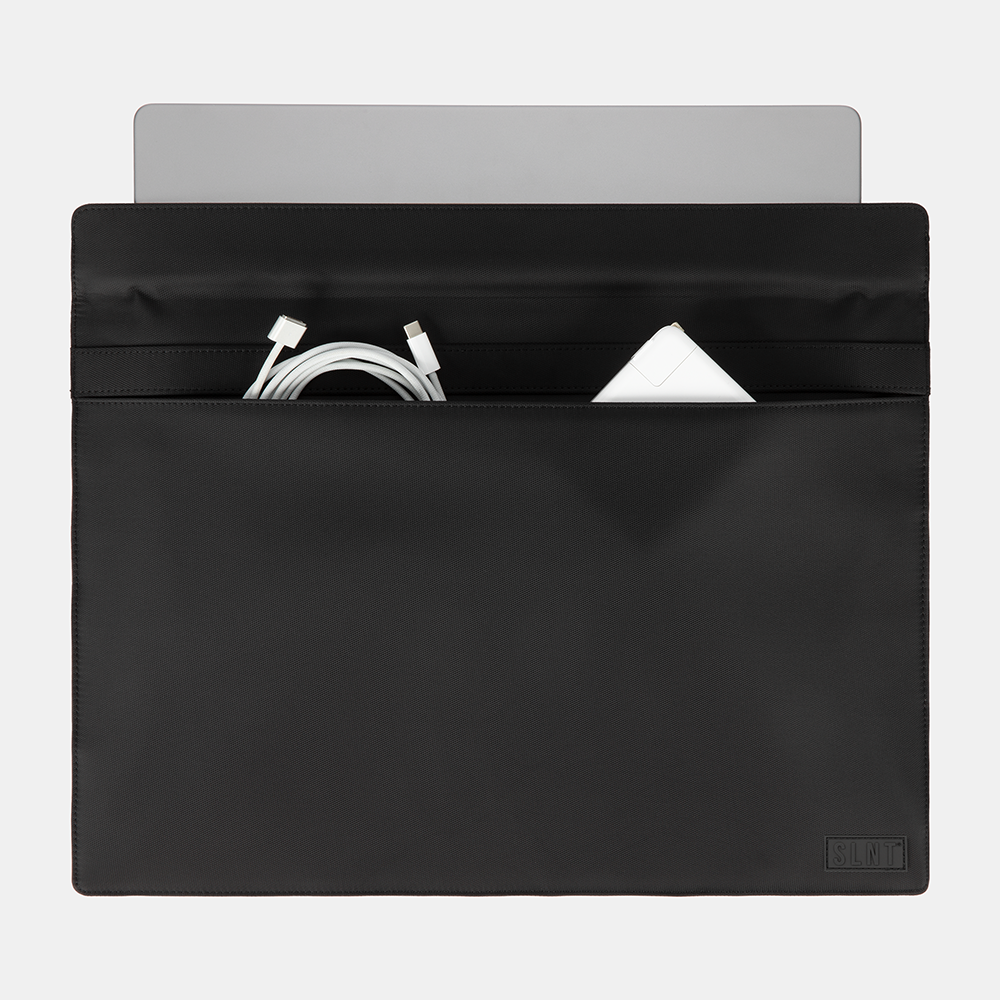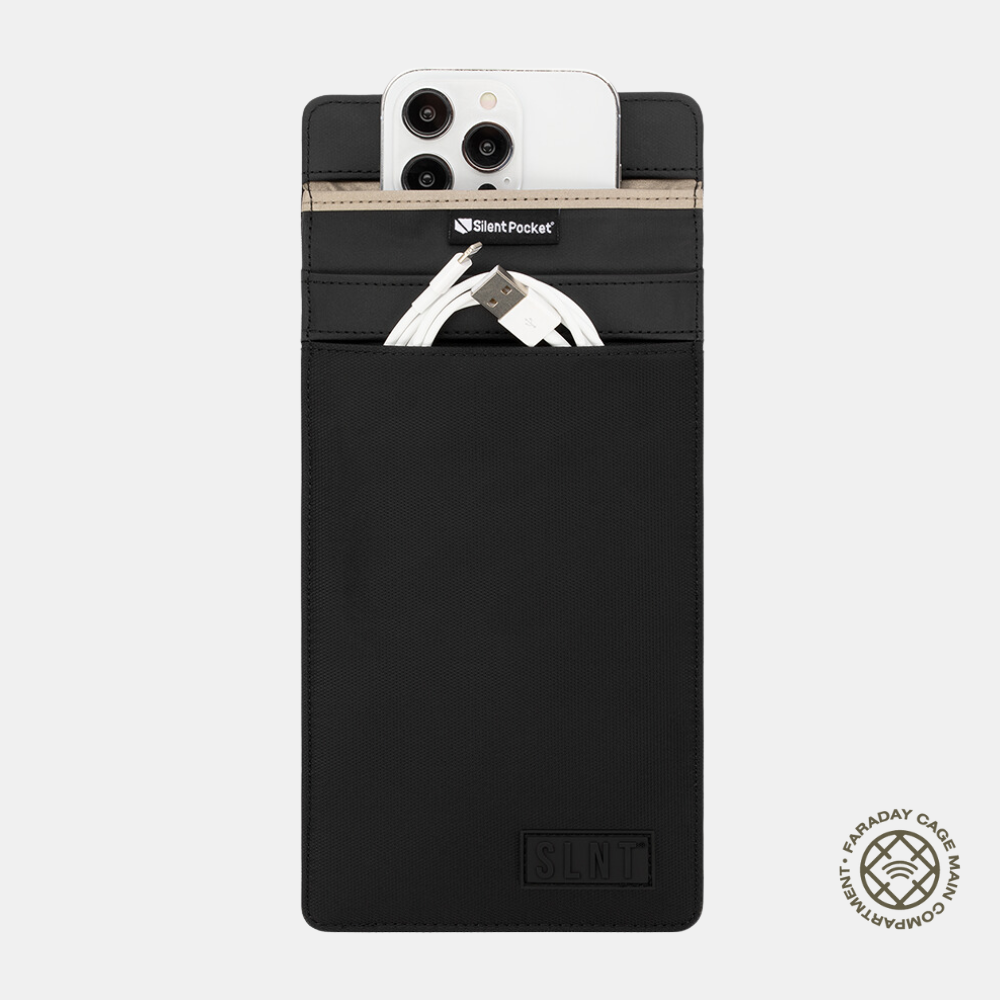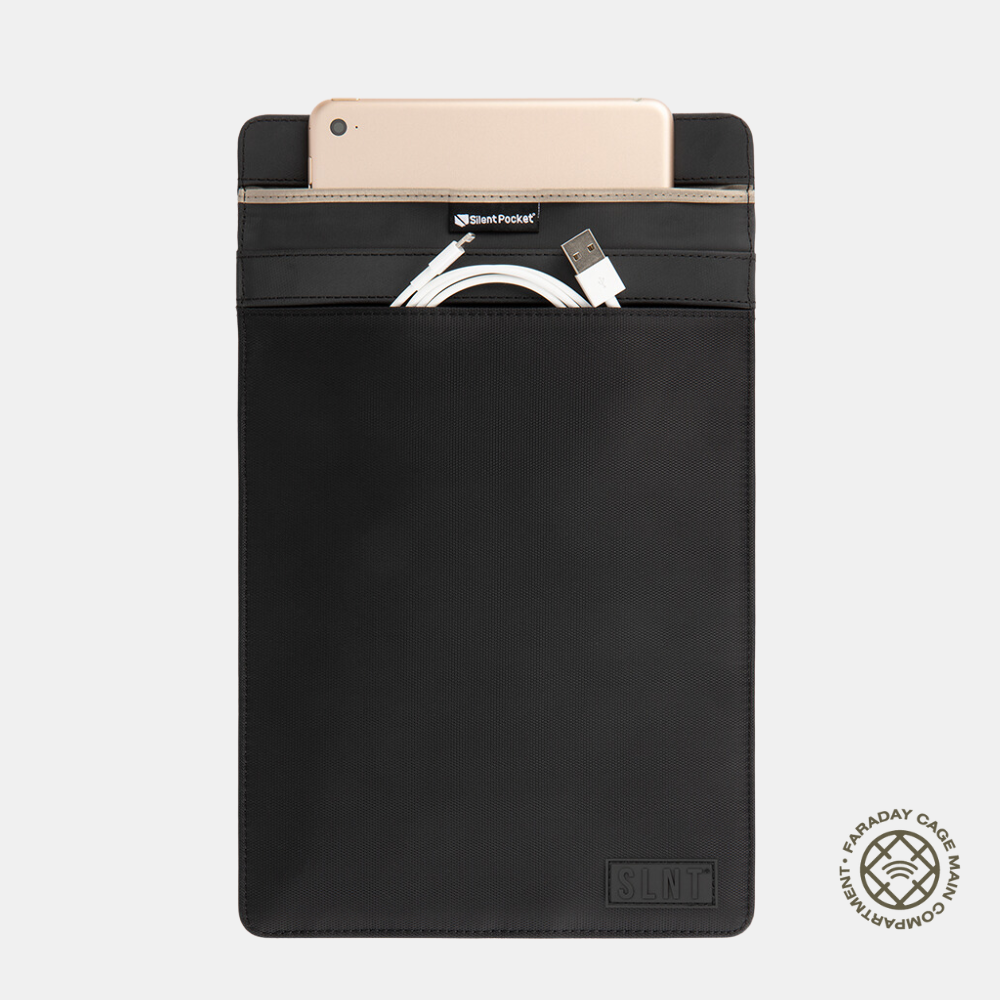
Faraday sleeves for engineers working on confidential projects


Leaving a phone unshielded in a secure workspace is like leaving a conference room door cracked during a closed-door briefing.
Nothing dramatic happens. Nothingseems wrong.
But the room was never truly private.
That’s the quiet risk most engineers and technical teams live with every day.
The Problem: Confidential Work, Constant Signal Leakage
Modern engineering work runs on sensitive data. Source code. Design files. Test results. Client IP. Government contracts. None of it is meant to travel freely.
Yet every powered device broadcasts by default.
Phones, tablets, laptops, test devices, and secondary hardware continuously emit cellular, WiFi, Bluetooth, GPS, RFID, and NFC signals. Those signals create metadata; location, proximity, usage patterns, and device identifiers, that can be logged, correlated, or harvested without touching your network.
This is not a software bug.
It’s how connected hardware is designed to operate.
Airplane mode helps. App permissions help. MDM policies help.
But software controls are still software. They can be bypassed, updated, misconfigured, or ignored by background radios you don’t see.
If a device is transmitting, data is moving.
The Solution: Physical Signal Control With Faraday Sleeves
Faraday sleeves provide a hardware-level solution to a hardware-level problem.
A properly engineered Faraday sleeve creates a sealed electromagnetic barrier around a device. When a phone or tablet is inside, wireless signals cannot enter or leave. Cellular, WiFi, Bluetooth, GPS, RFID, NFC, shut down physically, not digitally.
No signal. No background transmission. No remote access.
This is not encryption.
It’s containment.
Important clarification:Faraday products do not stop a device’s microphone from listening because the microphone is built into the device. What they do stop is the wireless transmission of any audio, data, or location while the device is shielded.
SLNT Faraday sleeves are built with patented technology, independently tested, and originally designed for military and operational use, where signal discipline is not optional.
What This Looks Like in Real Engineering Work
During secure design reviews, phones go into Faraday sleeves before the meeting starts. No Bluetooth scanning. No background pings. Just a closed room that stays closed.
On R&D floors, secondary phones and test devices stay shielded when not actively in use. No idle radios bleeding metadata across the building.
For engineers working on confidential client projects, Faraday sleeves keep personal devices contained while moving between offices, labs, and shared spaces.
When traveling, laptops and tablets ride inside Faraday-lined compartments during transit. Location data stays put. Exposure stays low.
In vehicles, Faraday sleeves prevent devices from continuously logging movement patterns tied to sensitive work routines.
At home, work phones stay shielded after hours. The workday ends cleanly. No bleed-over. No noise.
Why It Matters: Control Beats Convenience
Privacy in technical work is not about hiding.
It’s about control.
Engineers are trained to reduce attack surfaces, eliminate unnecessary exposure, and design systems that fail safely. Digital privacy is no different.
Every unnecessary signal is another surface.
Every unmanaged device is another variable.
Faraday protection gives engineers a simple rule:
If it’s shielded, it’s silent.
For some, reduced EMF exposure is an added benefit, but it’s secondary. The real value is operational clarity. Knowing when devices are active and when they are contained. Knowing that confidential work stays where it belongs.
That level of certainty is hard to get from software alone.
The Bottom Line
Confidential projects deserve more than trust in settings and policies.
They deserve physical boundaries.
Faraday sleeves give engineers a clean, reliable way to control device emissions without changing how they work. No apps. No updates. No guesswork.
Just signal discipline, on demand.
If you want to explore how physical signal control fits into technical workflows, start by learning how Faraday sleeves are used in real-world environments.