
Choosing the Best Faraday Pouch for Your Key Fob
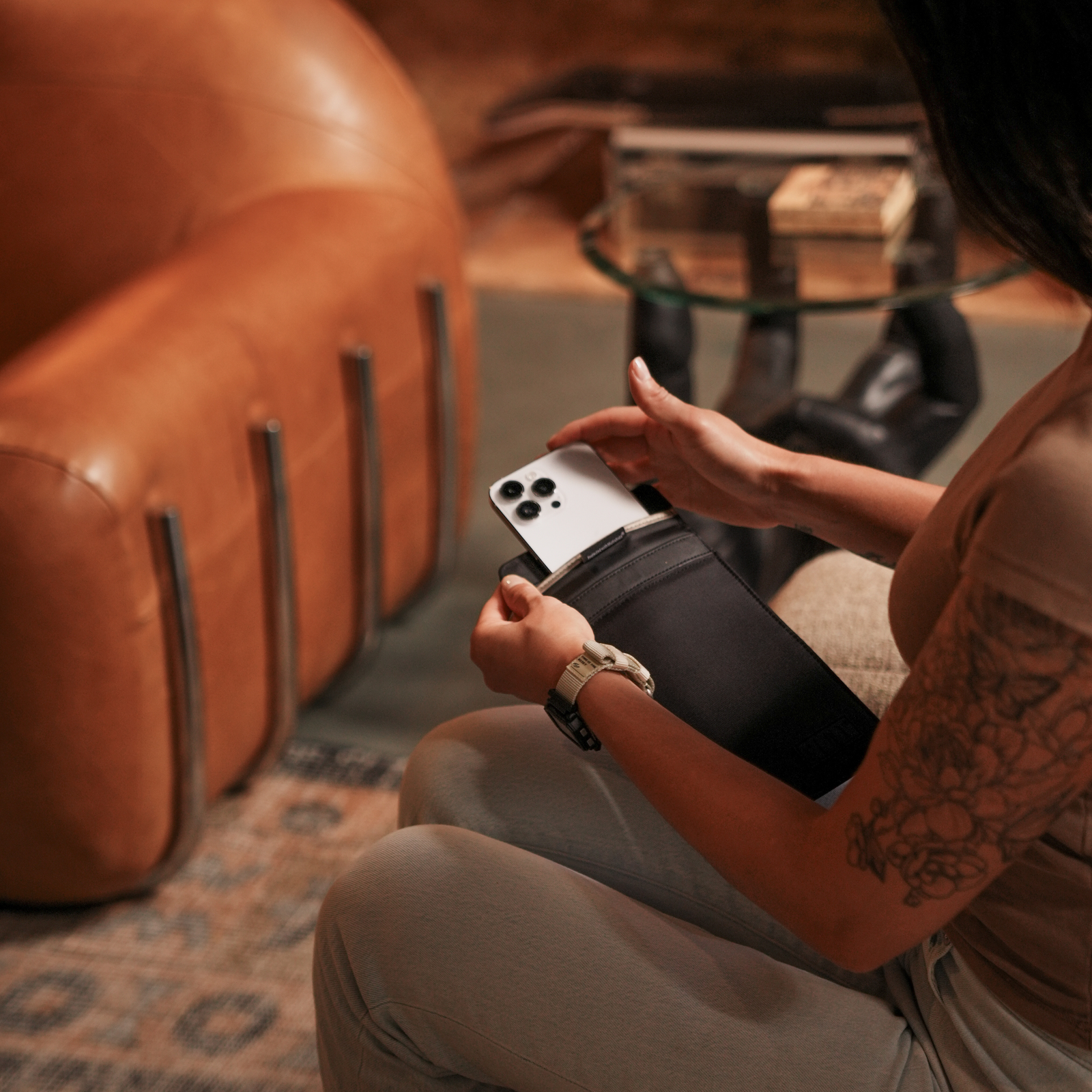

Most key fob pouches don’t fail because the shielding stops working. They fail because they end up in a drawer.
The pouch is too tight, the closure is fiddly, or it’s one more step when your hands are full of groceries. A week later, the fob is back in your pocket on its own.
So the best Faraday bag for a key fob is the one you’ll actually use every day. That means it fits your fob, closes in one motion, survives being sat on, and blocks the signal when you test it yourself. This guide covers those criteria, how to check them, and when a Faraday box by the front door is the better choice.
Why a key fob needs shielding at all
A keyless entry fob is a small radio. When you walk up to the car, the car sends out a signal, the fob answers, and the doors unlock.
That convenience has a gap. A relay attack uses a pair of devices to pass the signal between your car and your fob, even when the fob is inside your house. The car thinks the key is next to it.
A Faraday pouch closes the gap. It’s a shielded enclosure that blocks radio signals, so a fob sealed inside can’t hear the car or answer it. No signal out, nothing to relay.
That’s all it needs to do. The rest of this guide is about making sure it keeps doing it every day. If you’re also checking your car for anything that shouldn’t be there, our guide to finding a tracker on your car walks through a physical search step by step.
How to choose a Faraday pouch for your key fob
Look for these six things, roughly in order of how often they cause people to give up:
-
Fit: the fob slides in easily, with room for the keyring if you keep one attached.
-
Closure: it seals fully in one motion, ideally one-handed.
-
Daily durability: the closure and lining hold up to being opened and closed several times a day.
-
Pocket comfort: it’s flexible and slim enough to sit on without cracking or digging in.
-
Carry style: it matches how you already carry your keys.
-
Verified shielding: the car won’t unlock when the fob is sealed inside. You can check this yourself in a minute.
Fit comes first
A pouch that’s too tight becomes a chore. You wrestle the fob in, the keyring snags, and you start leaving it out “just this once.”
Measure your fob, or check the pouch dimensions against it before you buy. If you carry two fobs, or a fob plus a house key, size for the whole bundle. A little extra room is fine. A pouch so loose the fob rattles around is fine too, as long as it closes fully.
The closure is where pouches live or die
The closure is the part you’ll use most, and it’s the part that has to be sealed for the shielding to work. An open flap or a half-closed seam can let the signal through.
Look for a closure you can seal without thinking: a fold-over flap, a strong snap or magnetic close, or a roll-top. Then ask how it’ll feel on the 200th use, not the first. Flimsy hook-and-loop that loses its grip, or a zipper that catches, is how good intentions quietly end.
It has to survive your pocket
A fob pouch lives a harder life than most bags. It gets sat on, stuffed into jacket pockets, dropped into cup holders and thrown on counters.
Thin foil-lined pouches can crease along the same folds every day. Over time, those creases can crack the lining. A pouch built from durable shielding fabric with a solid outer layer holds up much better to that kind of abuse.
Match how you already carry keys
Don’t buy a pouch that asks you to change your habits. Change the pouch instead.
If your keys live in your front pocket, choose something slim. If they’re clipped to a bag, look for a pouch with a loop or carabiner point. If they ride in a jacket, size matters less than how quickly you can close it with cold hands.
Test it yourself
You don’t need a lab to check whether a pouch works on your car. You need two minutes.
-
Put the fob in the pouch and close it fully.
-
Walk up to the car and pull the door handle.
-
If the doors stay locked, the pouch is blocking the signal.
-
Take the fob out and try again to confirm the car responds normally.
Repeat the test every month or two. Linings wear, closures loosen, and a quick check is the easiest way to know the pouch is still doing its job.
One note: some cars use a motion-sensing fob or let you switch off keyless entry in the settings. Those help. A pouch adds a physical layer that doesn’t depend on menus or firmware.
Pouch or box? When a box is the better answer
Plenty of people searching for the best Faraday box for car keys aren’t thinking about a pouch at all. They’re picturing a bowl by the front door. That’s a different product and a different habit.
AFaraday box makes more sense if:
-
Your keys always land in the same spot when you walk in.
-
Your household has several fobs and drivers.
-
You mostly worry about the car parked in your driveway overnight.
AFaraday pouch makes more sense if:
-
You park in public lots, office garages or on the street.
-
You want the fob shielded wherever you go, not just at home.
-
Your keys don’t have a fixed home.
A box’s weak spot is the lid. If it’s left open, it’s just a bowl. A pouch’s weak spot is the habit of closing it. Pick the one whose weak spot you’re less likely to hit. Some people use both: a box at home, a pouch when they’re out.
Where it fits in a normal day
You get home and drop the fob into its pouch on the hook by the door, sealed for the night.
At the office garage, the fob goes back into the pouch when you step out of the car. It stays there through meetings and lunch.
At the gym, keys go into the locker in their pouch. Nothing in the locker room is talking to your car.
On a trip with a rental car, the rental fob gets the same treatment in an unfamiliar parking lot.
If you have a teen driver, a spare fob in a pouch is easy to hand over and easy to keep in the habit.
And if you carry a phone sleeve too, remember that Faraday gear cuts wireless connections, but it doesn’t turn off a phone’s microphone. The mic is built into the device and still works inside the sleeve.
What to skip
-
Claims of “100% protection” with no way to check them. A good pouch should pass the door handle test. That’s the claim that matters.
-
Pouches with no real closure. If it doesn’t seal, it doesn’t shield.
-
Anything you already know you won’t carry. The lowest-priced pouch that stays in a drawer costs more than one you use every day.
Why it matters
Your car is one of the most valuable things you own, and it’s parked in public most of the day. A small habit gives you control over who can talk to it.
This isn’t about expecting the worst. It’s the same as locking the front door. You do it without thinking, and you don’t spend the evening wondering.
SLNT Faraday gear uses patented Silent Pocket® construction, built for daily handling rather than a single test. OurFaraday key fob bagwas designed around exactly these criteria: easy to close, built to be carried, and simple to check against your own car.
If you’re comparing options, take a look at our Faraday bags for keys. And if you’re choosing protection for a phone or laptop instead, our guide tochoosing a Faraday bag for your devicescovers what changes.