
Securing company devices from wireless intrusion
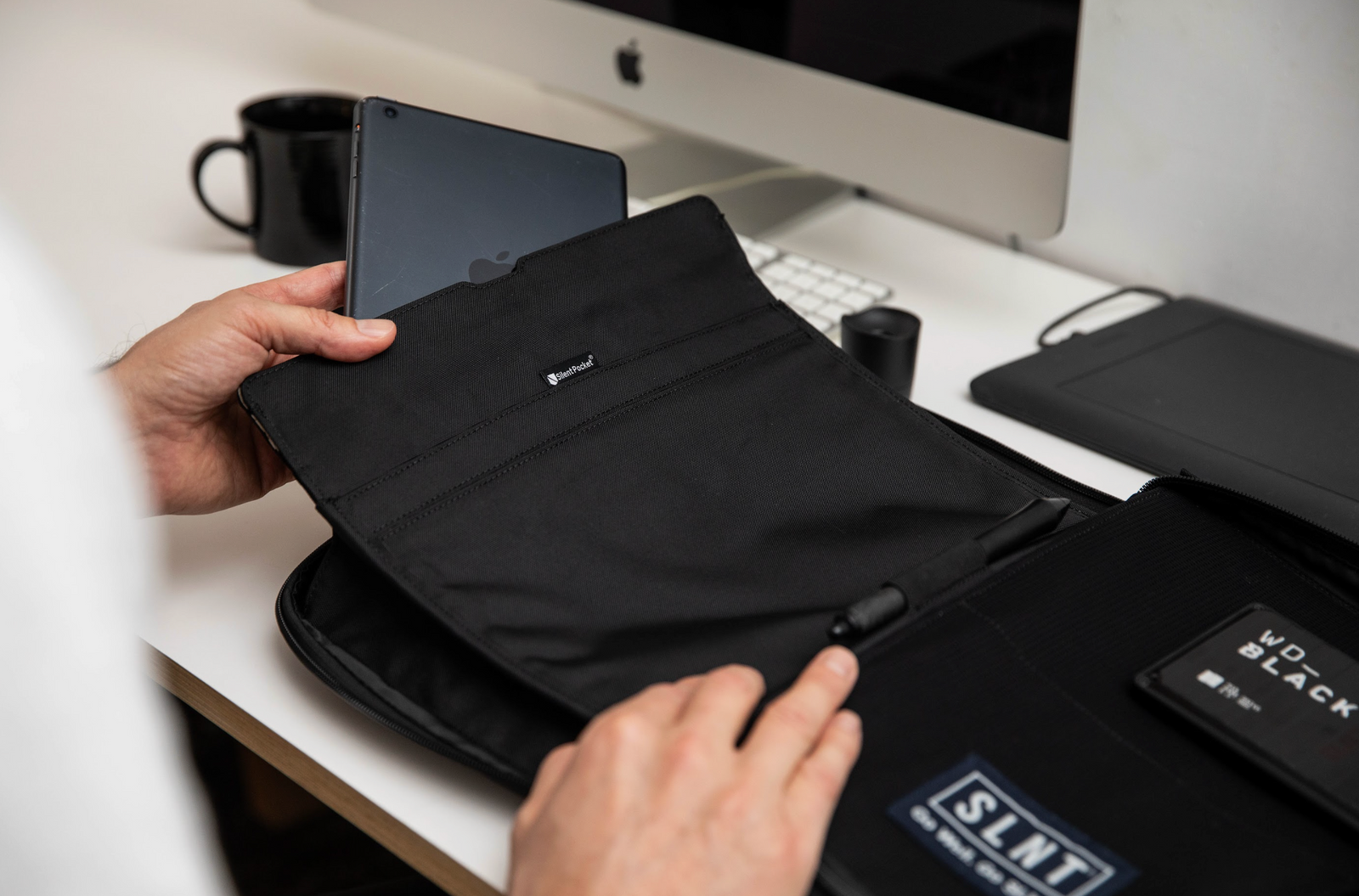

Locking down company devices but leaving them wirelessly exposed is like installing a steel door and leaving the windows open.
Most breaches don’t kick the door in. They slip through the air.
The problem: Wireless is the weakest link
Modern work devices are always talking. Phones, laptops, tablets, key fobs, and peripherals constantly broadcast cellular, WiFi, Bluetooth, GPS, RFID, and NFC signals. That chatter creates a digital footprint whether the device is “in use” or not.
For tech workers and companies, this exposure is not abstract. It’s operational.
-
Location tracking reveals routines, offices, commutes, and travel patterns.
-
Wireless intrusion opens the door to credential harvesting, man-in-the-middle attacks, and unauthorized access.
-
Bluetooth and WiFi scanning leaks device identifiers even when screens are locked.
-
RFID and NFC skimming puts access cards, badges, and credentials at risk.
Software controls help, but they don’t solve the core issue. As long as a device is transmitting or listening for signals, it remains exposed. Updates change settings. Permissions reset. Background processes keep running.
This is not paranoia. It’s how connected hardware works.
The solution: Physical signal control
To secure company devices from wireless intrusion, you have to control the signal itself.
Faraday protection works at the hardware level. A Faraday bag or sleeve physically blocks wireless signals from entering or leaving a device. No cellular. No WiFi. No Bluetooth. No GPS. No RFID or NFC.
This is not an app.
Not a setting.
Not a policy document.
It is a physical barrier that enforces silence.
It’s important to be precise:Faraday bags do not stop the microphone from listening because the microphone is built into the device. What they do stop is the ability for audio, data, or location information to be transmitted wirelessly while the device is shielded.
SLNT gear uses patented Faraday technology, independently tested and originally built for military and special operations environments. The same signal discipline now fits into everyday work life.
What this looks like in real workdays
A work phone goes into a Faraday sleeve during sensitive meetings so it cannot scan, connect, or transmit in the background.
A company laptop is stored in a Faraday backpack while commuting, preventing WiFi probing, Bluetooth tracking, and location leakage on the move.
Spare devices, tablets, or test hardware are kept in Faraday bags when not in use, eliminating silent background communication in offices or labs.
Key fobs, access cards, and badges are shielded in RFID-blocking wallets to prevent cloning and relay attacks.
Executives and remote workers use Faraday sleeves during travel days to reduce exposure in airports, rideshares, hotels, and shared workspaces.
IT teams isolate devices during onboarding, offboarding, or incident response to prevent remote access or data tampering while systems are reviewed.
These are simple habits. No workflow disruption. Just intentional signal control when devices don’t need to be online.
Why it matters
Security is not just about stopping attacks. It’s about reducing unnecessary exposure.
When company devices broadcast less, they reveal less. Fewer signals mean fewer identifiers, fewer logs, fewer opportunities for exploitation. Privacy improves. Operational clarity improves. Control returns to the person carrying the device.
For some teams, reduced wireless exposure is also a secondary benefit. When devices are shielded, EMF exposure drops during that time. Not a medical claim. Just a practical side effect of silence.
The bigger picture is autonomy. You decide when devices connect and when they don’t. Not the network. Not the environment. Not whoever is scanning nearby.
That mindset is already standard in military and high-risk operations. It’s increasingly relevant for modern work.
If you want an external benchmark on why organizations focus on reducing wireless attack surfaces, theNational Institute of Standards and Technology (NIST) consistently emphasizes minimizing unnecessary connectivity as part of sound cybersecurity hygiene.
The Bottom Line
Company devices don’t need to be online all the time.
They just act like they do.
Real security starts when silence is intentional. Faraday protection gives tech workers and organizations a physical way to shut the signal down, on demand, without relying on software promises.
You stay connected when it matters.
You go quiet when it doesn’t.
That’s how you secure devices in the real world.
That’s how you take back control.