Why You Can't Focus Anymore (And How Your Phone Is Training Your Brain)


You sit down to work. You open the laptop. Thirty seconds later, your hand reaches for your phone. You don't even remember deciding to do it.
Sound familiar?
That's not a willpower problem. It's a wiring problem. And your phone is the one doing the wiring.
Your Phone Was Built to Win
The apps on your phone weren't designed to help you. They were designed tokeep you. Engineers, neuroscientists, and behavioral scientists spent years tuning every notification, every red dot, every infinite scroll to hijack your attention.
It works.
The average person checks their phone over 140 times a day. Most don't even notice. Each tap delivers a small dopamine hit. Small enough to feel harmless. Frequent enough to rewire how your brain processes reward.
Over time, your brain stops chasing real focus and starts chasing pings. Deep work feels uncomfortable. Boredom feels intolerable. Stillness feels wrong.
You're not broken. You've been trained.
Signs Your Phone Has Hijacked Your Focus
-
You reach for it without deciding to
-
You can't sit through a meal, a meeting, or a red light without checking
-
Quiet feels uncomfortable
-
You start tasks but rarely finish them
-
You wake up tired even after a full night in bed
If most of those land, the issue isn't discipline. It's design.
What This Is Actually Costing You
Phone addiction isn't just a productivity issue. It bleeds into every part of your life.
Focus. Research from the University of Texas at Austin found that simply having your phone in the room, even face-down, even powered off, reduces cognitive performance. Your brain knows it's there.
Sleep. Late-night scrolling tanks melatonin and fragments sleep cycles. The phone on your nightstand is the first thing you grab in the morning and the last thing you put down at night. That's not rest. That's a shift.
Mood. Constant input means constant comparison, reactivity, and low-grade anxiety. The pings don't have to be bad news. They just have to keep coming.
Presence. The people in front of you can feel when you're half-here. So can your kids.
And while we're at it, your phone is also broadcasting nonstop. Location. Identity. Behavior patterns. Even when you're not using it. That's the deal you signed when you bought it. The question is whether you keep paying for it.
Why Apps and Screen Time Settings Don't Work
Most people try to fight back with software.
Screen time limits. App blockers. Grayscale mode. Focus modes. Do Not Disturb.
Then they bypass them in three taps. Or the buzz still gets through. Or the phone is still right there, silent and glowing, daring you to peek.
Software fixes are working against the same psychology that built the problem. It's like trying to quit drinking by keeping a bottle on your desk.
The real fix isn't digital. It's physical.
A Hardware-Level Off Switch
A Faraday bag is a sleeve or pouch lined with conductive material that physically blocks every wireless signal: cellular, WiFi, Bluetooth, GPS, RFID, NFC.
Drop your phone inside, and it goes dark. No notifications reach it. No data goes out. No location pings. No background sync. Nothing.
It's not an app you can override. It's not a setting you can toggle in a weak moment. It's a physical wall between you and the noise.
One thing worth being clear about: the microphone is built into the phone itself, so the bag doesn't disable it. Faraday gear blocks signals, not hardware. The point isn't to muzzle the device. It's to cut its leash to the rest of the world, so it stops cutting yours.
SLNT® was originally built for Special Operations. The same patented technology, independently tested and trusted by government agencies, defense contractors, and privacy professionals worldwide, now lives in something you can drop on your nightstand.
Where It Fits Into Real Life
This isn't about going off the grid. It's about deciding when the grid gets you.
Deep work blocks. When you need to actually finish something, your phone goes in the sleeve. Not on the desk. Not in a drawer. In the sleeve. The signals stop, and so does the pull. AFaraday phone sleeve makes this a 30-second habit.
The bedroom. Stop charging your phone six inches from your head. Drop it in a sleeve before bed. No 2 a.m. notifications. No EMF next to your skull. No "just one quick check" before sleep.
Meals and family time. Nobody wins the dinner-table phone war with willpower. But a sleeve on the counter ends it without a fight. Your kids will notice.
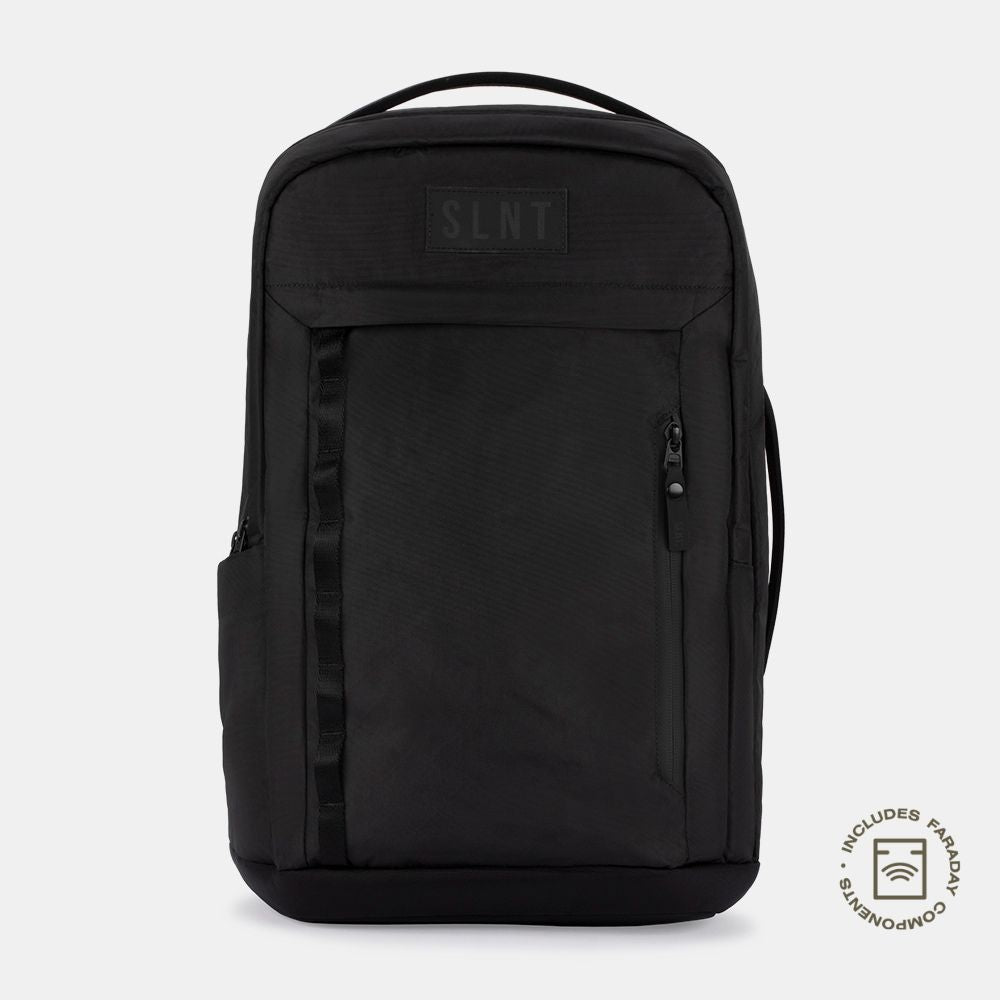
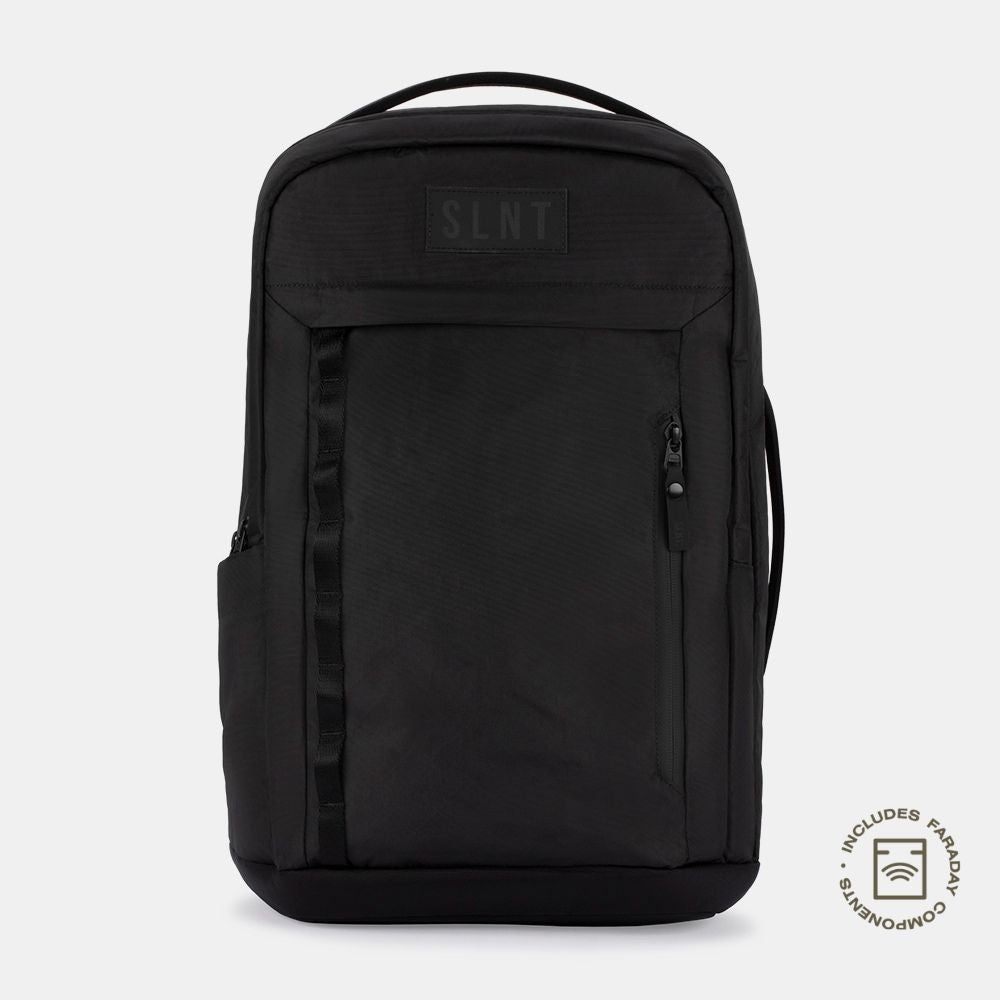
Commutes and weekends. AFaraday sling or backpack lets you carry your phone without being on call. Go for a hike. Sit through a coffee. Be somewhere without being everywhere.
Travel. Airports, hotels, rental cars. All environments designed to keep you connected and tracked. Stash your devices when you don't need them. Pull them out when you do.
Parenting. Hand a kid a sleeved phone, and the phone becomes useless. Hand them an unsleeved one, and it becomes the parent. Pick which one you want.
Why This Matters Beyond Focus
The conversation around phones usually splits into two camps: the privacy people and the wellness people. They're talking about the same thing from different angles.
When you control when your phone connects, you control:
-
What gets to interrupt you
-
What gets to track you
-
What gets to shape your mood
-
What gets to steal your time
That's not just focus. That's autonomy.
There's also a quieter benefit. Sealed inside Faraday gear, your devices stop emitting. That means less EMF exposure when the phone is on your body, in your bag, or beside your bed. Not a medical claim. Just less radiation than you'd otherwise be sitting in. Take it as a bonus, not the headline.
The bigger point is simpler: you decide when you're reachable. Not Apple. Not Meta. Not the algorithm. You.
How to Start Without Overcomplicating It
You don't need a system. You need one habit.
-
Pick one block of your day where your phone goes in the sleeve. Morning routine. Workout. Dinner. The first hour at the office. One block.
-
Notice what happens. The reach. The itch. The slow settling.
-
Add another block when you're ready.
That's it. No apps to install. No streaks to maintain. No dashboard to log into. Just a physical move that works whether you're motivated or not.
Take Back the Wheel
Your phone isn't going anywhere. Neither are the algorithms behind it. They'll keep getting sharper, faster, and harder to ignore.
You don't have to fight them every time you sit down to work. You just have to put a wall between you and them when it counts.
That's what SLNT® gear is for. Patented Faraday technology. Independently tested. Field-proven. Built so you don't have to think about it. You just use it.
Pick your block. Drop your phone in. See what comes back.
Silence the chaos.