
Your Metadata Is for Sale. Here's Who's Buying It and What They Actually Know About You.

You didn't sell your data.
You just agreed to 47 terms and conditions you never read.
Unfortunately, that's the same thing.
Most people think of privacy like a locked door. Either someone breaks in or they don't. But that's not how modern surveillance works. Nobody needs to hack you. They just buy access to the version of you that your devices broadcast around the clock.
That version knows more about you than most people in your life.
What Is Metadata, Actually?
Forget the technical definition. Here's what it means in plain terms.
Metadata is everything about your activity except the content itself. It's not what you said in the text. It's who you texted, when, how often, from where, and what you did right after. It's not what you searched. It's the pattern of what you search, when you search it, and what you clicked.
Content is the letter. Metadata is the envelope, the postmark, the delivery route, and every address the letter passed through.
And here's what courts, agencies, and data brokers figured out a long time ago: the envelope tells them almost everything they need to know.
So Who's Buying It?
Data brokers. Companies like Acxiom, LexisNexis, and Spokeo exist for one purpose: aggregate everything about you and sell it to whoever pays. They pull from apps, loyalty programs, public records, purchase history, location pings, and social media. By the time they're done, they have a profile that includes your income range, political lean, health conditions, relationship status, and daily routine. They sell that to insurers, employers, advertisers, and anyone else with a checkbook.
Advertisers. Not just the ad on Instagram. The entire ecosystem behind it. Your device pings cell towers and WiFi networks constantly. Retail stores use Bluetooth beacons to track how long you stood in front of a display. Data management platforms stitch together your behavior across apps, browsers, and physical locations to build a single unified profile. That profile gets auctioned in real time every time a webpage loads.
Insurance companies. Health, life, and auto insurers increasingly use third-party data to adjust pricing. Your fitness app data, sleep patterns, location history, and even social media behavior can factor into underwriting decisions. You consented to it in a privacy policy nobody reads or prints out.
Foreign intelligence. This one most people don't think about. Adversarial nations don't need to hack government systems to build targeting packages on military personnel, government contractors, and executives with security clearances. They buy commercial location data from the same brokers everyone else uses. Researchers have demonstrated they could track devices entering classified facilities, map patterns of life for specific individuals, and correlate movement with sensitive operations. All from data that was legally purchased.
Your employer, landlord, and future employers. Background check services pull from data broker networks. That information feeds hiring decisions, rental approvals, and credit assessments. You never consented to that specific use. But you consented to the collection somewhere, and the downstream sales are unregulated.
You have become the product.
What They Actually Know
Let's be specific.
From your location data alone, a buyer can determine where you live, where you work, where you worship, and who you sleep next to. Which doctors you visit. Whether you've been to a gun range, an addiction treatment center, or a fertility clinic. They can tell your income bracket from which stores you walk into. They can tell if you're a parent, a grandparent, a student, a veteran, a cancer patient, or a person of faith.
Not because you told them.
Because your device did.
From your app usage and browsing patterns, they know what keeps you up at night. What you're insecure about. What medications you're researching. What your relationship looks like. What your finances feel like.
From your network connections, communication frequency, and behavioral patterns, analysts can map your entire social graph. Who influences you. Who you trust. Where you're vulnerable.
None of this required a warrant. None of it required a hack.
Your device broadcast it. The tower logged it. The broker packaged it. The buyer used it.
Why You Should Actually Care
Most people hear "your data is being sold" and shrug.
That's by design.
The system works better when you feel like this is abstract. Technical. Somebody else's problem. The more disconnected you feel from the consequence, the less likely you are to do anything about it.
So let's make it concrete.
Your location data gets sold to a data broker. That broker sells it to an insurance company. Your family's driving behavior in Life360 gets packaged and sold to LexisNexis. Your car's built-in system reports your speed, braking, and late-night driving to Verisk. Your premium goes up. You have no idea why. Neither does your agent.
Your browsing history gets scraped and sold. A hiring manager runs your name before the interview. The profile flags financial stress, medical searches, and inconsistent location patterns. Instability. You don't get the callback. The rejection email says they went another direction.
Your phone's location data gets purchased from a commercial data broker by a foreign intelligence service. They cross-reference it with public records. You work near a defense facility. You travel on a predictable schedule. You're now a person of interest. No hacking or warrant. A legal purchase anyone with a budget could make.
These aren't hypotheticals. These are documented use cases. Real buyers and consequences. Real people who had no idea it was happening until it already had.
The shrug is a luxury you're financing with your own exposure.
It's not paranoia when the market exists. When the buyers are named. When the transactions are legal.
At that point it's just a decision. Either you control the signal, or someone else profits from it.
The Fix Isn't in Your Settings
This is where most privacy advice falls apart.
Delete the app. Turn off location. Use a VPN. Review your permissions.
Good advice. Incomplete answer.
Because none of that touches the signals inside your device. WiFi probes broadcast whether you're connected to a network or not. Bluetooth beacons fire constantly in the background. Cellular towers triangulate your position regardless of what's toggled in your settings. The signal doesn't care what your privacy dashboard says.
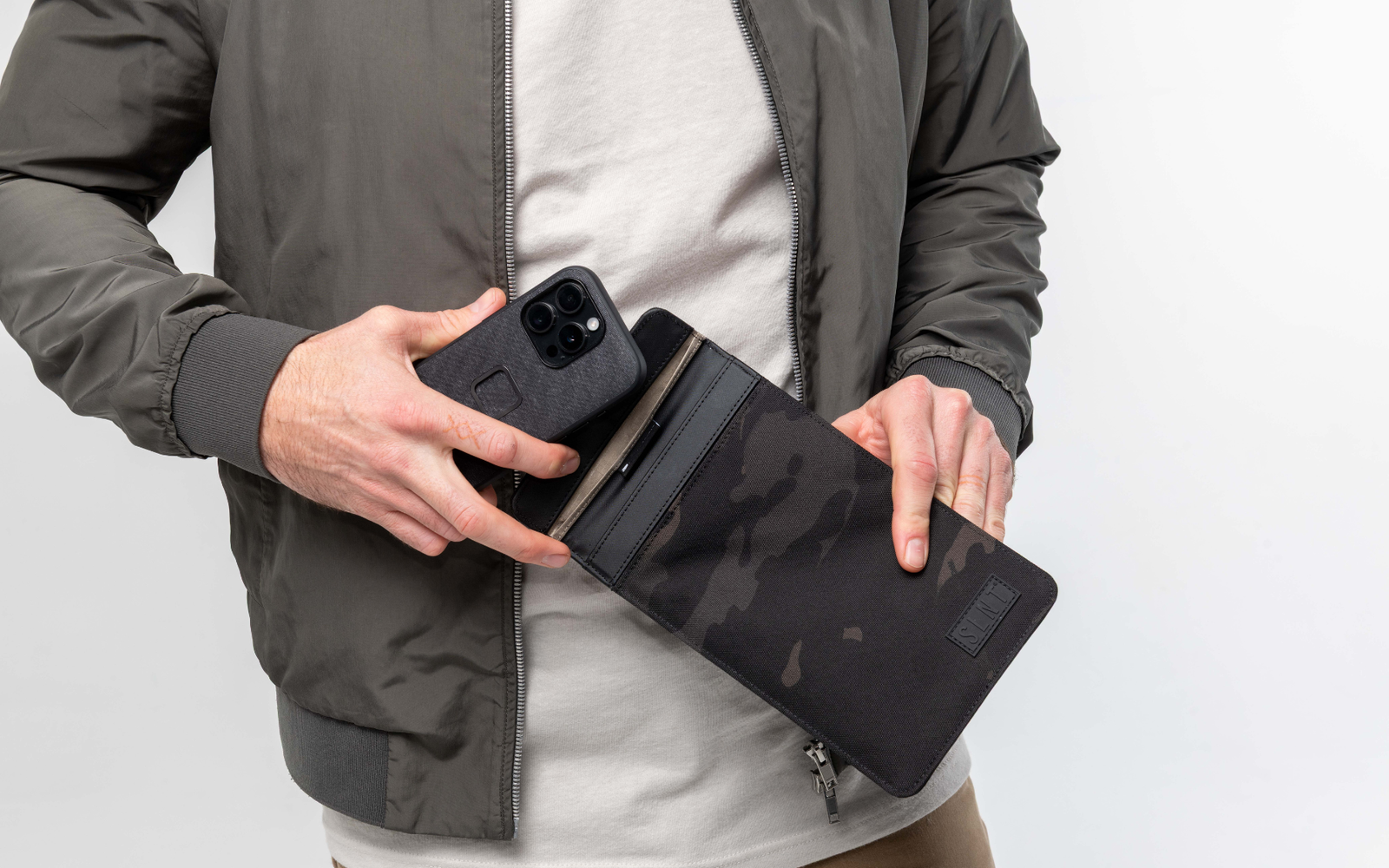
This is exactly why SLNT builds Faraday bags. Physical gear with signal-blocking technology built into the material itself. Slide your phone into a SLNT Faraday sleeve, close it, and every signal stops. Cellular. WiFi. Bluetooth. GPS. RFID. All of it. The device is still on. It's just invisible to the outside world.
That's not a privacy setting. That's physics.
SLNT gear has been tested & exceeds IEEE 299-2006 and MIL-STD-188-125-2 standards, validated at White Sands Missile Range, and trusted by U.S. Special Operations where signal discipline isn't optional. The same technology is now built into everyday carry: sleeves, slings, backpacks, wallets, and dry bags designed to fit into real life without looking tactical or drawing attention.
Close the bag. The signal stops. It's that simple.
You Are Here. Or You're Not.
The question isn't whether your data has value. It clearly does. The question is who gets to decide when it gets broadcast, to whom, and for what purpose.
Right now that decision is being made for you. Every minute your device is in your pocket it's making choices on your behalf. Most of those choices benefit someone else.
Taking that back doesn't require going off-grid. It doesn't require a privacy law to pass or a tech company to grow a conscience.
It requires a bag. A digital off switch. And the decision to use it whenever you want.
Your data is worth something.
Act like it.
SLNT builds premium Faraday bags and signal-blocking gear for everyday life. Patented tech. Military-tested and approved. Close the bag and the signal stops. - Shop today.