
Privacy Alert: Your Car and Your Keys Are a Tracking Pair

Pulse Check: Your key fob is transmitting right now. Sitting on your desk, in your pocket, clipped to your bag. It doesn't need to be near your car to broadcast. And your car doesn't need to be moving to log data. Modern vehicles and the keys that start them form a continuous, two-way signal pair that most people never think to question until that signal gets used against them.
The Breakdown: Why Software Is Failing You
The tracking threat here doesn't live in an app. It lives in the hardware you carry every day and the infrastructure designed to read it.
-
Relay attack vulnerability: Key fobs using passive keyless entry broadcast a low-frequency signal that can be captured and amplified by two people with off-the-shelf equipment. One stands near your house, one near your car. The car reads the amplified signal as legitimate. The door opens. The engine starts. No hacking required.
-
ALPR networks: Automated License Plate Readers are mounted on police cruisers, toll gantries, parking structures, and private security cameras. Every time your plate passes one, your location and timestamp get logged. These databases are retained for months or years and are increasingly accessible to commercial data brokers, not just law enforcement.
-
Connected vehicle data: Modern cars are rolling data collectors. Telematics systems log your routes, speed, braking patterns, fuel usage, and geolocation continuously. That data is transmitted to the manufacturer, and in many cases, sold to insurers, marketers, and third-party aggregators without explicit consent.
-
Bluetooth and UWB key pairing: Newer digital car keys use Bluetooth Low Energy and Ultra-Wideband to authenticate proximity. Both signals are detectable by external sensors well beyond the range of your own vehicle.
There is no app setting that stops a relay attack. No VPN that blocks an ALPR camera. No encryption layer that prevents your manufacturer from logging your route. The signals exist at the hardware level, which means the fix has to exist there too.
The Physical Fix: The Faraday Shield
Blocking the signal your key fob emits is the most direct way to close the relay attack window. And it takes one step.
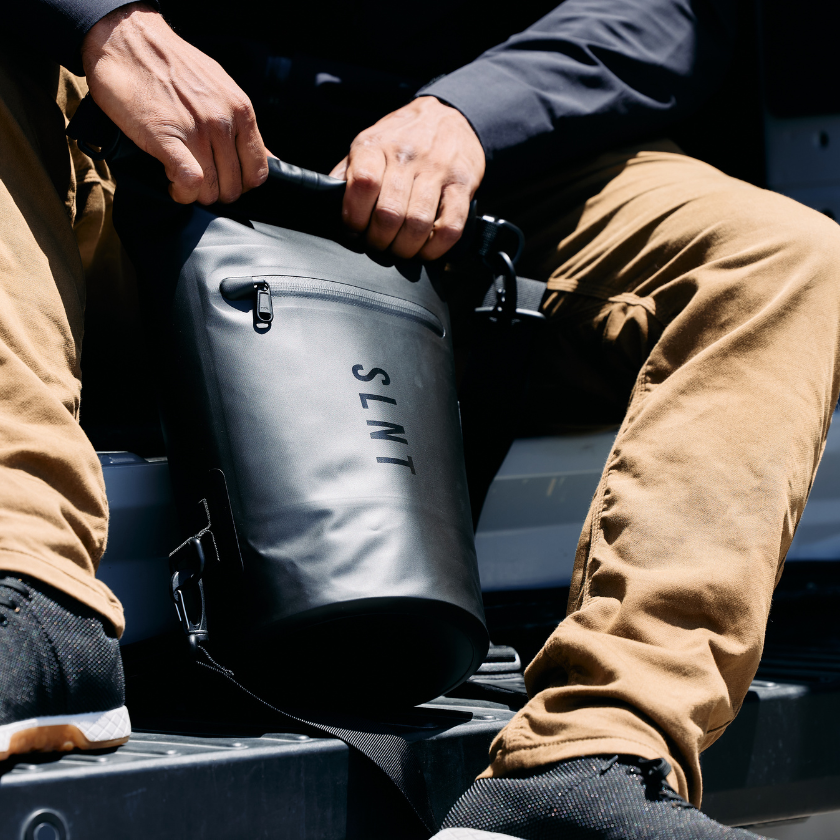
SLNT Faraday key fob sleeves and pouches create a patented hardware-level barrier that eliminates the electromagnetic signal your fob broadcasts entirely. No signal leaves the enclosure. No relay equipment picks it up. No amplification is possible because there is nothing to amplify.
For the broader vehicle tracking picture, pairing key fob protection with phone signal control removes the secondary layer of location data that follows you everywhere your car does.
Browse SLNT Faraday sleeves and everyday carry gear built for exactly this.
Actionable Integration: How to Go Signal Silent
-
At home and overnight: Place your key fob inside an SLNT Faraday Phone Sleeve or key pouch the moment you walk in the door. Most relay attacks happen from outside the home targeting fobs left near entryways. Remove the signal and you remove the vulnerability entirely.
-
In transit and parked: When your car is parked in an unfamiliar area, keep your fob shielded inside your bag or pocket pouch. ALPR cameras log the plate regardless, but eliminating the fob signal removes the proximity attack surface while your vehicle sits unattended.
-
Pair your phone protection: Your car's telematics and your phone's location data tell the same story. Keep your phone in an SLNT Faraday bag when you don't need connectivity. The vehicle logs the route. Your phone doesn't need to confirm it for anyone else.
Spec Note: SLNT Faraday gear blocks all incoming and outgoing wireless signals: GPS, WiFi, Bluetooth, Cellular, NFC, and RFID. It does not stop the internal microphone of a device from recording locally if the device is active. What it guarantees is that any locally captured data cannot be transmitted to an external server while the device is shielded.
Technical Validation: The Physical Layer Advantage
Relay attacks work because the key fob's signal exists in physical space, not in software. No firmware update closes that window completely. No app manages the RF output of the hardware itself. Manufacturer security patches address the authentication protocol, not the signal broadcast.
A Faraday enclosure solves the problem at its origin. SLNT's patented construction attenuates electromagnetic signals across the full RF spectrum. The fob is physically inside the enclosure. The signal cannot exit. No relay equipment in range can detect, capture, or amplify what isn't there.
Physics doesn't have an override.
Silence the Chaos
Your car knows where you've been. Your key fob announces where you are. And the infrastructure built around both of them is logging more than most people realize.
You don't need to ditch the car or go back to a physical key. You just need to control when those signals are live and when they aren't.
One sleeve. Total signal silence.
Leave a comment
Comments will be approved before showing up.