
Are Faraday Bags Legal?
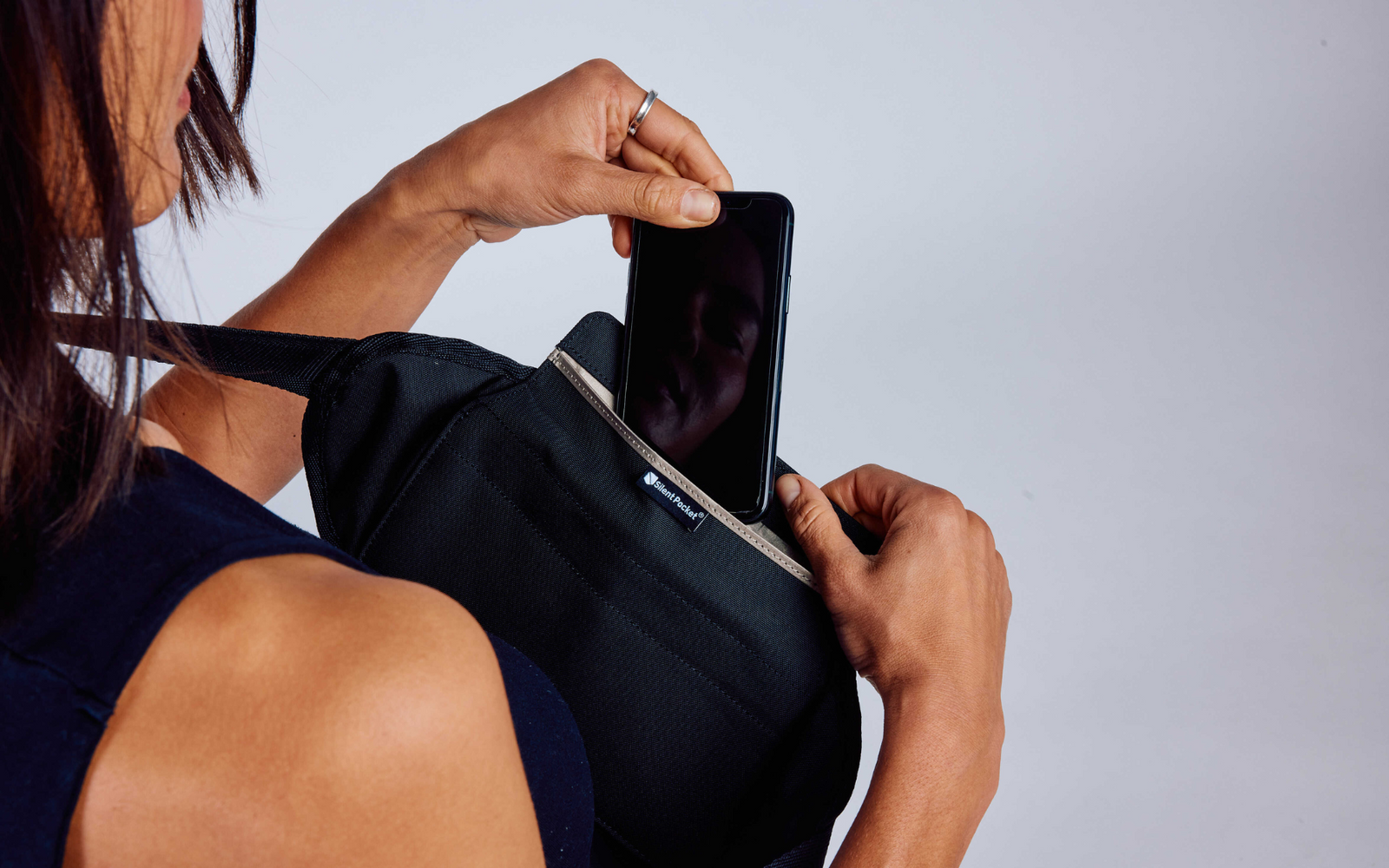

Yes. Faraday bags are legal to buy, own and use in the United States. There is no federal law against putting your own phone, key fob or card in a shielded bag.
The confusion comes from a different product. Signal jammers are illegal, and people often lump the two together because both stop a phone from connecting. They do it in completely different ways, and that difference is what the law cares about.
The short answer
-
Faraday bags: legal. A Faraday bag is a passive, shielded enclosure. It blocks signals to and from whatever is inside it. It transmits nothing.
-
Signal jammers: illegal for consumers. A jammer is an active transmitter. It broadcasts radio noise that overpowers signals for every device in range.
-
The deciding factor: whether the product sends out a signal. A bag that only affects its own contents is fine. A device that interferes with other people’s devices is not.
Why signal jammers are illegal
Picture a quiet coffee shop. Someone pulls out their phone and puts it in a bag. Their phone goes offline. Nobody else notices.
Now picture someone switching on a jammer in the same room. Every phone in range loses signal. The person at the next table can’t take a call. The barista’s card reader drops its connection. In a worse case, someone nearby can’t reach 911.
That is the problem the law targets. A jammer doesn’t just control the owner’s device. It takes control away from everyone around them.
According to theFCC, federal law prohibits the operation, marketing or sale of any type of jamming equipment that interferes with authorized radio communications, including cellular, WiFi and GPS. Violations can bring large fines, seizure of the equipment and possible jail time.
So, are cell phone jammers legal? Not for private citizens in the U.S. Are signal jammers legal for GPS or WiFi? Same answer. The ban covers every type, and it applies even if you only plan to use it on your own property. Only authorized federal use is exempt.
Why Faraday bags are not jammers
A Faraday bag works on the opposite principle. It doesn’t generate anything. It has no battery, no antenna and no power switch.
Close a phone inside and the phone simply can’t reach the network, the same way it loses signal deep in a parking garage. Nothing is broadcast. Nobody else’s connection changes. The phone next to yours, outside the bag, works normally.
That’s why the law treats them differently. You’re choosing what your own device can do. You aren’t reaching into anyone else’s.
If you want the physics behind it, we break it down inDo Faraday bags work? These 4 tests reveal the truth.
How to tell a Faraday bag from a jammer
If you’re shopping and something looks off, check the product against this list:
-
Power: A Faraday bag needs no battery or charging. A jammer does.
-
Antennas: A Faraday bag has none. Many jammers have visible antennas.
-
Range: A Faraday bag affects only what’s inside it. A jammer lists a range in feet or meters.
-
Wording: Faraday products say “block,” “shield” or “isolate.” Jammer listings say “jam,” “disrupt” or “interfere,” often with a frequency list and output power.
-
Who it affects: If a product claims to stop phones in a room, a car or a meeting it isn’t wrapped around, it’s a jammer.
A legitimate Faraday bag is a bag. If a listing reads more like a radio, walk away.
Where the law draws the line
Owning a Faraday bag is legal. What you do with it still matters, the same way it does with a backpack or a pair of gloves.
Several states have laws against lined bags built to beat store security tags, often called booster bags. Those laws target intent to steal, not shielded bags in general. Prisons and some secure facilities also set their own rules on what you can bring inside.
Protecting your own devices and data is a normal, lawful use. That covers nearly everyone who buys one.
How people actually use them
Most people want simple, everyday control.
You park in a busy lot and want your key fob’s signal contained while you’re away from the car. AFaraday bag holds the fob and the problem goes away.
You walk into a meeting and want your phone fully offline, not just on silent. A phone sleeve does it in a second. One note here: a Faraday bag cuts wireless connections, but it doesn’t turn off the microphone. The mic is built into the phone, so it still works inside the bag.
You come home and want a real break from notifications. Drop the phone in, close it and you’re off the grid until you decide otherwise.
Taking one on a trip? We cover that in our guide totraveling with Faraday bags.
Why the distinction matters
A jammer takes control from other people. A Faraday bag gives control back to you.
That’s the whole point. Your phone, your car keys and your cards are always ready to talk to something. A Faraday bag lets you decide when they do. You don’t need anyone’s permission to make that choice, and you don’t affect anyone else when you make it.
SLNT bags are built with patented Silent Pocket® construction for exactly that kind of use: personal, practical and on your terms.
Quick FAQ
Is it legal to put my phone in a Faraday bag?
Yes. Shielding your own device is legal in the U.S.
Are cell phone jammers legal?
No. Federal law bans the use, sale and marketing of jammers by private citizens.
Can a Faraday bag interfere with other people’s phones?
No. It only affects the device inside it.
Ready to choose when the world gets access to you? Take a look at ourFaraday bags.