
Can Your Phone Mic Be Used to Listen In? How Mic Blockers Actually Work
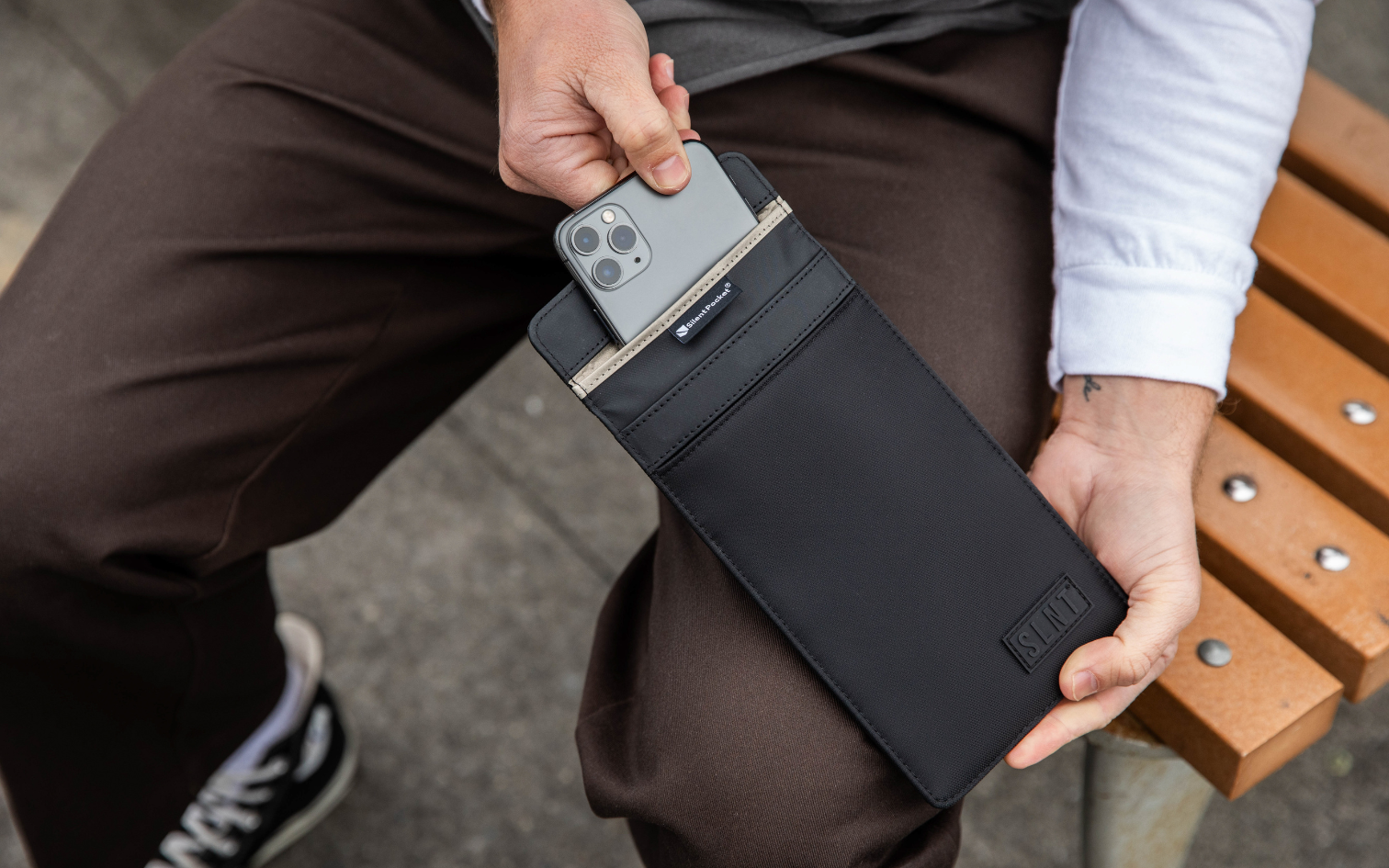

Your phone's microphone doesn't need your imagination to work. It needs permission from an app, and a lot of apps already have it.
That's the real starting point for this question, not the version of it that shows up in group chats after a suspiciously well-timed ad.
What the Evidence Actually Shows
Start with the myth everyone's heard: your phone is secretly listening to sell you things. In 2018, researchers at Northeastern University ran a large-scale study on more than 17,000 Android apps, looking specifically for evidence of apps secretly activating the microphone to capture audio for advertising. They found none. What they did find were apps quietly capturing screenshots and screen recordings and sending them to third parties, a real privacy problem, just not the one people assume.
So the popular theory doesn't hold up. That doesn't mean the underlying concern is unfounded, it means the actual risk lives somewhere else.
The Real Risk Isn't Ad Targeting, It's Access
A phone's microphone is genuinely a target for more targeted forms of surveillance: spyware, stalkerware, and apps that request far more permission than their function requires. If a malicious or compromised app has microphone access, and the phone has a live signal, that access can, in principle, be used to capture and transmit audio without an obvious sign to the user.
This is a real, well-documented category of risk. It's just a narrower and more targeted one than "your phone is always listening." Most people aren't individually targeted by this kind of tool. Journalists, executives, activists, and people handling sensitive information are the more common targets, which is worth knowing so you can calibrate concern to the actual threat model instead of a generalized one.
Why Faraday Protection Isn't the Fix for This, and What It Actually Does Instead
Here's the part that matters most, and it's worth stating plainly:a Faraday bag does not block a phone's microphone. The microphone is separate hardware from the phone's radios. Sealing a phone in a signal-blocking enclosure stops it from sending or receiving any wireless signal, but it doesn't physically disable the mic itself, which can still capture sound the same as it would anywhere else.
What Faraday shielding does solve is a different, related problem: transmission. If a phone is fully sealed and has zero signal, anything its microphone captures has nowhere to go. It can't upload, sync, or stream to anyone in real time, because the phone can't communicate with anything while it's sealed. That's a meaningful form of control, just not the same thing as "blocking the mic," and it's important not to conflate the two.
Actual microphone blocking requires a different category of tool entirely:
-
Software permission controls. Revoking mic access for apps that don't need it is the most direct fix most people have available, and it costs nothing.
-
Hardware mic-block plugs. Common for laptops with a physical audio jack, these exploit the jack's own circuitry to redirect audio input away from the built-in mic. They work because of how the jack is wired, not through any kind of signal blocking.
-
Physical hardware kill switches. Some privacy-focused laptops include a switch that physically disconnects the microphone circuit. This is a genuine hardware-level fix, but it's rare on phones and most consumer laptops.
-
Adhesive mic covers. Worth a mention because they're common, and worth being honest about: they muffle sound, they don't fully block it. Sound travels through most adhesive materials at least partially, so this is a partial mitigation, not a hard fix.
Where Each Piece Actually Fits in Daily Life
Since these are different tools for different problems, they tend to show up at different moments.
Sensitive meetings and conversations. Sealing every phone in the room in a shared Faraday bag removes the transmission risk entirely, real-time streaming or remote access included, even if you can't verify every app's mic permissions in the room.
Video calls on a laptop. A physical mic-block plug or a hardware switch is the right tool here, not a signal-blocking sleeve, since the laptop needs to stay connected to actually be on the call.
Routine app hygiene. A quarterly pass through your phone's microphone permissions, revoking access for anything that doesn't clearly need it, closes the most common access point before it becomes a question at all.
Traveling with sensitive work. Combining a sealed Faraday phone sleeve for transmission control with tight permission settings for the apps you keep gives you two separate, honest layers instead of one product doing a job it isn't built for.
Parenting and kids' devices. Managing which apps have mic access on a child's device is a software task, not a shielding one, and it's worth treating as its own separate checklist.
Digital-detox windows. Sealing a phone during personal time solves the "always reachable" problem completely, even though it isn't solving a mic concern specifically.
Matching the right tool to the right layer is the actual skill here, not finding one product that claims to do everything.
One Thing This Doesn't Do
To say it once more, directly: Faraday shielding blocks wireless signal. It does not disable a device's built-in microphone. That's true of every SLNT product, and it's true of Faraday shielding as a category, not a limitation specific to any one brand.
It's also worth being precise about what sealing a phone does accomplish. It removes the transmission path for anything the mic might capture while sealed. It doesn't make the device incapable of recording, and it isn't a claim of total audio privacy in every sense.
Why It Matters
Knowing exactly what a tool does, and doesn't do, is its own form of control. Assuming one product handles every layer of a problem is how people end up with a false sense of security in exactly the moment it matters most. The more useful approach is boring and effective: match software fixes to software problems, hardware fixes to hardware problems, and signal isolation to signal problems.
SLNT's Faraday shielding is built on patented technology, independently tested to exceed MIL-STD-188-125-2, and it's honest about doing one job well rather than claiming to do every job at once. For the original research behind the "is my phone listening" question, the Panoptispy study from Northeastern University is the peer-reviewed source most of the reporting on this topic traces back to.
Close It Out
Your phone's mic isn't the mystery everyone treats it as. The risk is real, it's just narrower and more specific than the popular version, and the fix depends on knowing which layer you're actually protecting.
Take a look at SLNT's Faraday bags and sleeves for the transmission layer, and pair it with the permission and hardware fixes that handle the rest.