Corporate security playbook: using Faraday bags for secure meetings


The meeting takes place behind closed doors, but your devices are the ones letting it leak.
Phones on the table. Laptops in bags. Smartwatches are buzzing quietly.
The room feels private, but digitally, it isn’t.
Modern meetings are porous by default
Corporate security didn’t fail because people stopped caring.
It failed because wireless devices never stop talking.
Every phone, laptop, tablet, or key fob in a meeting is a transmitter. Even when “idle,” devices broadcast cellular, WiFi, Bluetooth, GPS, RFID, and NFC signals. That creates exposure:
-
Location tracking before, during, and after sensitive meetings
-
Bluetooth and WiFi probing that reveals presence and movement
-
Credential leakage through background connections
-
Data harvesting from devices that never fully disconnect
-
Operational intelligence inferred from who met, where, and for how long
Software controls help, but they don’t solve the core issue. Settings can be overridden, updated, ignored, or bypassed. As long as a device emits signals, the door stays cracked.
It’s not espionage movie stuff. It’s basic signal reality.
Physical signal control, not software promises
Faraday protection works because it blocks signal to and from the device.
A Faraday bag creates a physical barrier around electronics that blocks all wireless signals—cellular, WiFi, Bluetooth, GPS, RFID, and NFC—at the hardware level. No signals in. No signals out.
That matters in corporate environments because:
-
It doesn’t rely on user behavior
-
It doesn’t depend on operating systems
-
It doesn’t break when software updates
-
It works instantly and predictably
If it can’t transmit, it can’t leak.
What “secure meetings” actually mean in practice
For executive teams, legal counsel, M&A groups, R&D leaders, and security-conscious enterprises, Faraday use fits naturally into daily operations.
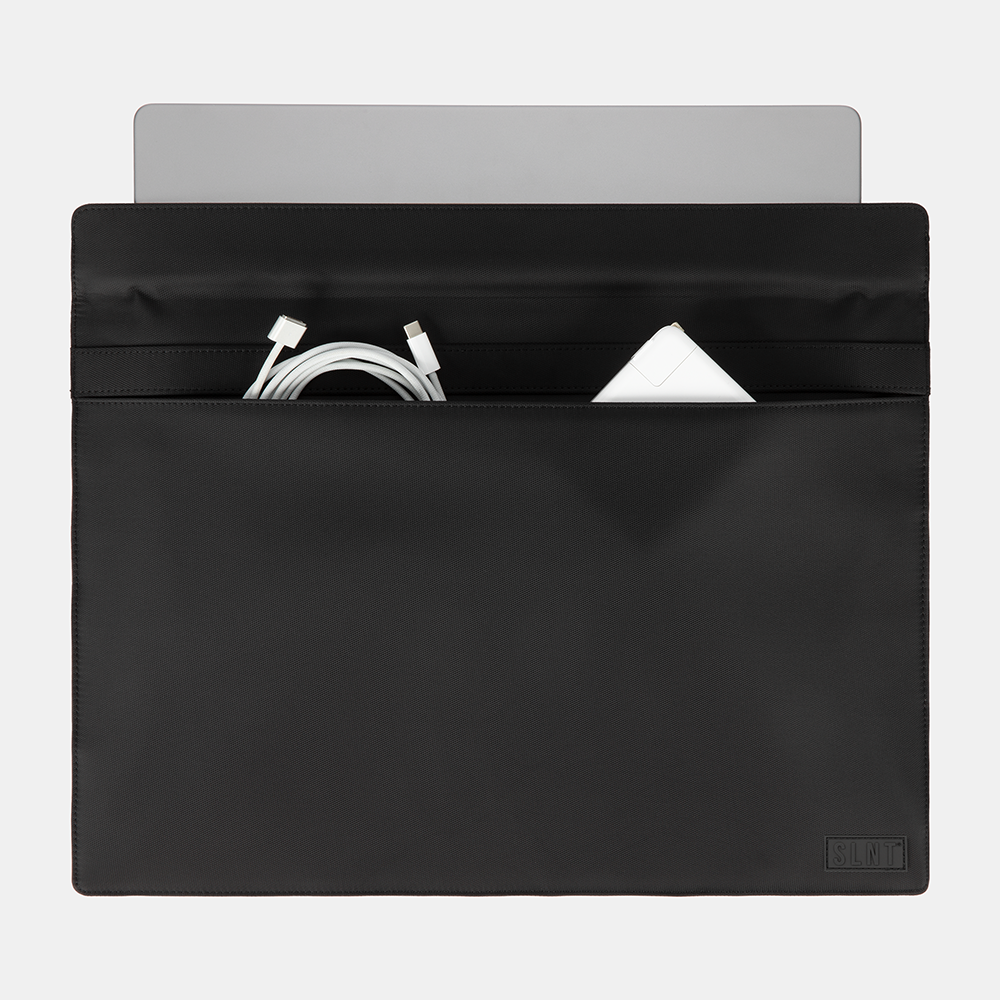
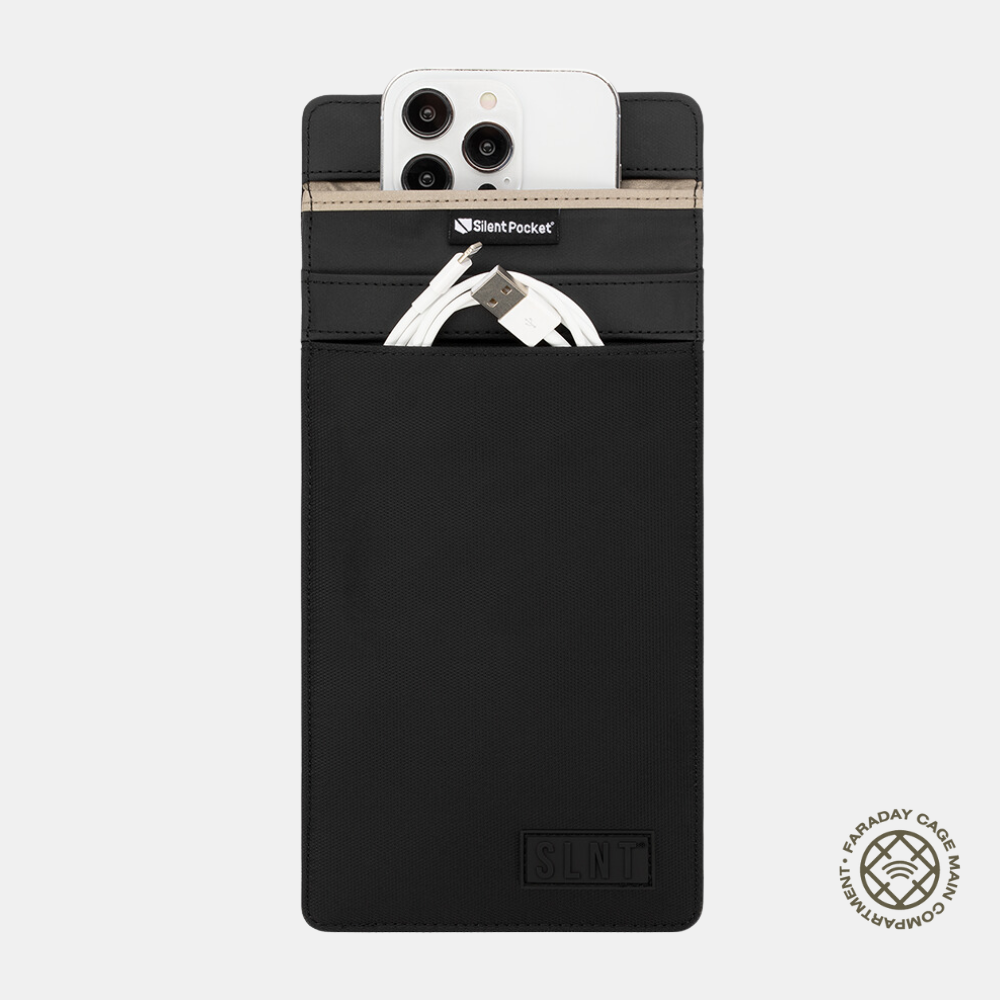
Phones go into slimFaraday sleeves before leadership offsites, negotiation sessions, or strategy reviews, no awkward rituals, no software checklists. Laptops and tablets are stored in signal-blocking backpacks or briefcases while not actively in use, preventing background connectivity during travel to and from meetings.
In shared office spaces and coworking environments, Faraday bags eliminate Bluetooth probing and WiFi scanning when devices aren’t needed. In vehicles, shielding devices during transit prevents location trails from forming between offices, partners, and sensitive sites.
Even for remote teams, Faraday storage during off-hours reduces unnecessary signal exposure and preserves clear boundaries between work and downtime, something executives quietly value.
The gear doesn’t change how meetings run. It just closes the digital footprints around them.
What a Faraday bag does in a corporate meeting
A Faraday bag used during secure meetings:
-
Physically blocks all wireless signals
-
Prevents location tracking and background connectivity
-
Stops remote access, data transfer, and signal leakage
-
Works without apps, settings, or user intervention
-
Provides predictable, repeatable protection
This is signal discipline, applied calmly.
Why it matters: control beats convenience
Corporate privacy isn’t about secrecy. It’s aboutautonomy.
When meetings leak metadata, who met, where, and when, decisions become visible long before outcomes do. Over time, those patterns erode competitive advantage, operational security, and trust.
Faraday protection restores something simple but powerful:intentional connectivity. Devices connect when you choose. Silence when you don’t.
Some teams also value the secondary benefit of reduced EMF exposure while devices are shielded. That’s an added layer, not the primary reason, but it aligns with a broader move toward healthier, more intentional work environments.
SLNT® Faraday gear is built with patented shielding technology, independently tested for signal-blocking performance, and originally developed for military and operational use before moving into enterprise and everyday life. It’s already used in real-world environments where mistakes carry consequences.
For broader context on why wireless metadata matters in business settings, see guidance from the U.S. National Institute of Standards and Technology on information security and communications risk management.
The bottom line
You don’t need more policies.
You need fewer signals.
Secure meetings aren’t about paranoia or overreach. They’re about closing obvious gaps with tools that work quietly and consistently.
Faraday protection gives teams physical control over their digital footprint without changing how they work, think, or lead.
That’s not extreme.
That’s prepared.
Silence the chaos.