SLNT best practices for airport and border data privacy


You wouldn’t hand a stranger your unlocked phone and say, “Take a look.”
But at airports and border crossings, that’s effectively what most people do without realizing it.
Your devices are on. Broadcasting. Checking in. Talking to towers, networks, and scanners you don’t control.
The Problem: Airports Are High-Signal Environments
Airports and border zones are some of the most aggressive digital environments you’ll ever walk through.
Your phone, laptop, smartwatch, and passport-enabled wallet constantly emit signals. Cellular. WiFi. Bluetooth. RFID. GPS. Those signals create a live data trail: where you are, what you carry, and which devices are tied to you.
Here’s what that exposure looks like in the real world:
-
Passive tracking: Devices ping nearby towers and access points, even when you’re not actively using them.
-
Credential skimming: RFID-enabled passports, credit cards, and badges can be scanned if they’re unshielded.
-
Device access risk: Even without handing over your phone, information can be gathered at the border through wireless signals your device constantly emits.
-
Metadata leakage: Even without unlocking your phone, background processes transmit identifiers that link your movement and behavior.
This isn’t about paranoia. It’s how modern infrastructure works.
The Solution: Physical Signal Control
Software settings are helpful, but they are not definitive.
Airplane mode, power-downs, and privacy toggles all rely on the device behaving exactly as promised. Updates change settings. Background radios wake up. Mistakes happen.
Faraday protection works differently.
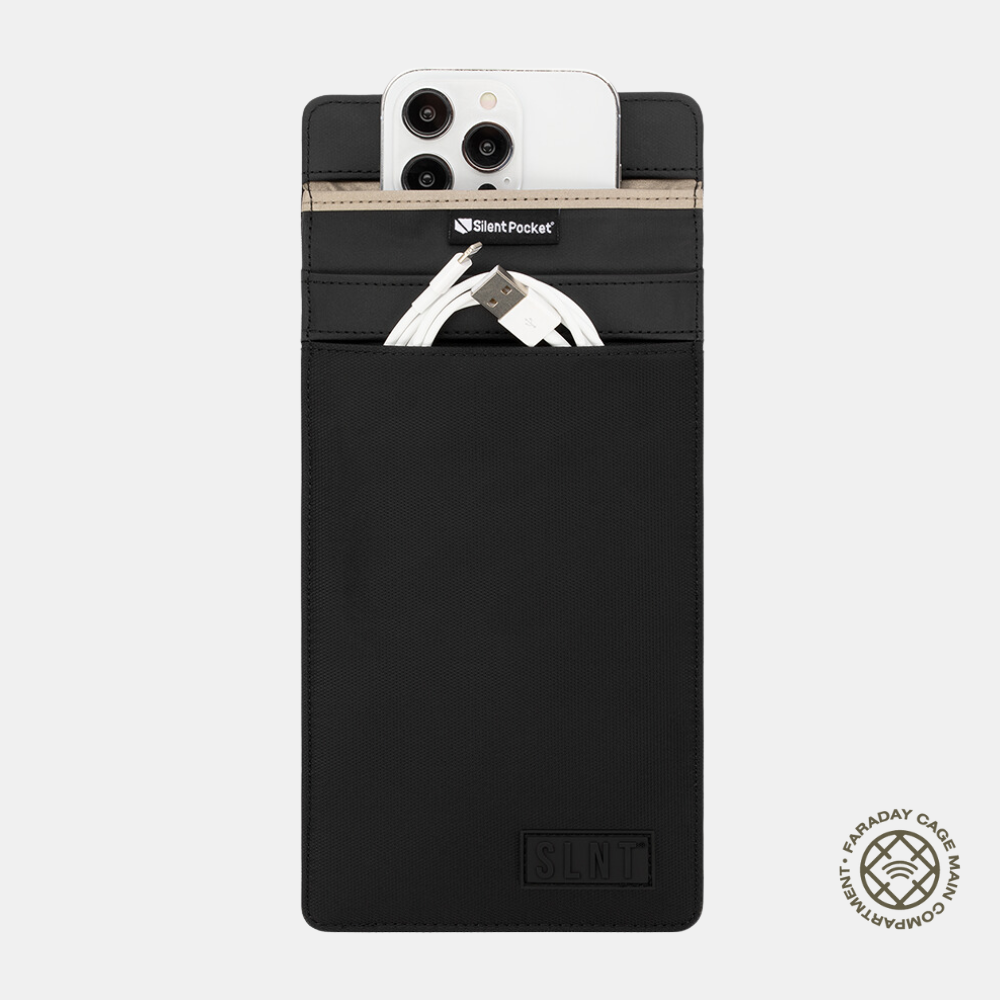
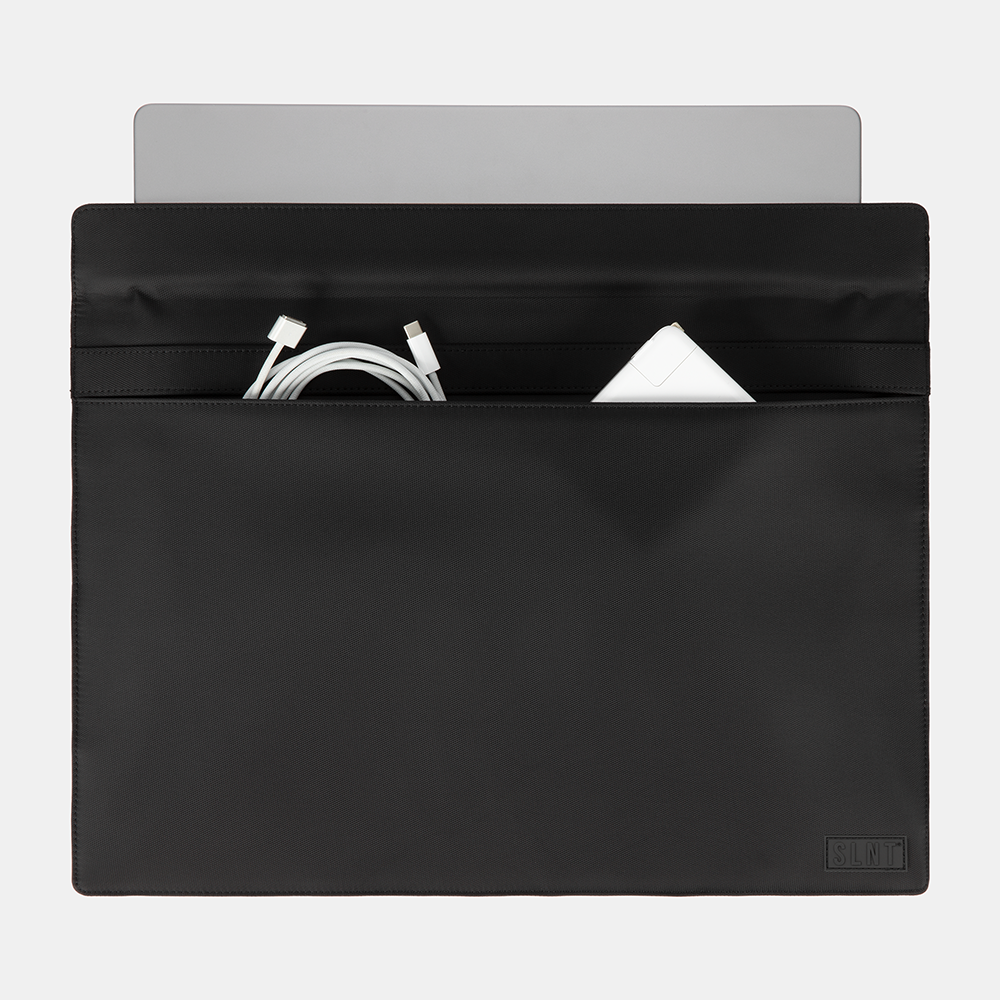
AFaraday bag creates aphysical barrier around your device. No signal goes in. No signal comes out. Cellular, WiFi, Bluetooth, GPS, RFID, and NFC are blocked at the hardware level.
There’s nothing to configure. Nothing to forget. If the device is inside the bag and sealed, it’s disconnected from the grid.
What Airport and Border Privacy Looks Like in Practice
Before a traveler moves through a busy airport, they place their phone into aFaraday sleeve. The device instantly stops pinging networks while still staying powered on.
A laptop must be placed in a Faraday compartment inside a carry-on backpack during travel to ensure no background connections. No scanning. No beaconing.
During customs or border processing, unused devices remain shielded until the moment they are intentionally needed. Digital exposure stays minimal and controlled.
RFID-enabled passports and wallets sit inside Faraday-lined storage, preventing silent scans while standing in crowded lines.
Rental car key fobs ride in Faraday pouches to prevent relay-style access while traveling or staying in hotels.
None of this slows travel down. It simply removes unnecessary digital chaos.
Airport Data Privacy Best Practices
Simple steps to reduce digital exposure while traveling:
-
Shield phones and laptops with Faraday bags when not actively in use
-
Block RFID and NFC signals from passports and wallets
-
Keep devices silent during transit, boarding, and customs
-
Limit wireless transmission to moments you choose
-
Combine software privacy settings with physical signal blocking
Control beats convenience when the environment is hostile to privacy.
Why It Matters
Privacy is not about hiding. It’s about autonomy.
When your devices constantly broadcast, you lose control over when and where data moves. That loss compounds across trips, borders, networks, and years.
Physical signal control restores a simple truth:nothing leaves unless you allow it.
For some travelers, reducing unnecessary wireless exposure is also a secondary benefit. Less transmission means less EMF exposure while devices are stored.
SLNT gear is built withpatented Faraday technology, independently tested, and originally developed for military and operational environments where signal discipline is non-negotiable. Today, the same principles apply to everyday travel.
The Bottom Line
Airports and borders don’t need to own your data.
You don’t have to fight technology, or abandon it, to travel smarter. You just need tools that enforce boundaries at the physical level.
Privacy doesn’t require permission. It requires intention.
Silence the chaos.