
RFID Money Belts for Travel: Cards and Passport Off the Grid

In a crowded market or a packed metro, the stranger pressed against you does not need your wallet to read your cards.
They just need to get close. And travel puts you close to strangers all day.
Here is the direct answer: your passport and some of your cards carry chips that can be read wirelessly at short range. An RFID-blocking money belt or passport wallet stops that by blocking the signal while your documents are sealed inside. It does not stop your card from working when you want it to. It stops it from answering a scanner you never approved.
One honest note up front, because we would rather be straight than scary. Most modern payment cards are lower risk than the ads suggest. Your passport chip, your access badges, and some IDs are the pieces actually worth shielding. On a trip, those are exactly the things you carry everywhere.
What RFID Blocking Does for Your Passport
Modern passports are "e-passports." They hold a small RFID chip that stores your identity data so it can be read electronically at border control. The U.S. State Department confirms that chip is built into the passport.
A chip that can be read at a booth can, in theory, be read by any reader that gets close enough. RFID blocking closes that gap. Slide your passport into a shielded wallet or sleeve and the conductive lining blocks the signal, so the chip cannot answer anyone until you take it out.
To be precise: this stops short-range scanning of the chip. It does not track you, and it is not about location. It simply means your passport data stays private until you choose to present it.
Do You Actually Need It? The Honest Version
For most travelers, the answer is: it is cheap insurance for the items that matter, and overkill panic for the ones that do not.
We break down the full "is RFID theft real" question in a separate piece. The short version: payment networks have made card skimming far less useful than it once was, so do not lose sleep over your Visa. But your passport and any access or ID cards carry readable data, and travel raises your exposure. You spend hours shoulder to shoulder with strangers, in places where you cannot vet every reader in every doorway.
So the smart move is not fear. It is shielding the few things worth shielding and moving on with your trip.
Money Belt, Passport Wallet, or Sleeve?
These are three different jobs. Pick by what you are trying to solve.
-
A money belt does two things at once. Worn under your clothes, it hides your valuables from pickpockets, and an RFID-lined version also blocks scanning. Best for long transit days and rough neighborhoods where physical theft is the bigger worry.
-
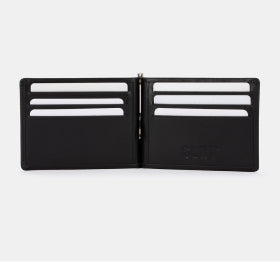
A passport wallet is a slim, everyday carry for your passport and a few cards. It keeps documents organized and shielded, and it slips into a jacket or bag. Best for airports, hotels, and daily sightseeing.
-
A card sleeve is the minimalist option for one or two high-value cards or an ID badge.
SLNT builds these with top-grain leather lined with Multishield material, the same shielding independently tested by Keystone Compliance to meet MIL-STD-188-125-2 and exceed IEEE 299-2006 across the 1 to 40 GHz range. It is patented Silent Pocket technology, trusted by military units and hundreds of thousands of travelers, not a logo printed on a thin card. That testing is the difference between real protection and a guess, which matters more when you are far from home.
A Simple Travel Checklist
Before you go, sort your carry into what needs shielding and what does not:
-
Passport in a shielded wallet or sleeve. This is the one to prioritize.
-
One or two backup cards shielded and kept separate from your daily-use card.
-
Access or ID badges shielded, since these are often the easiest to clone.
-
A daily-use card left accessible, since tap-to-pay is convenient and lower risk.
-
Phone in a Faraday sleeve when you want it fully off the grid in transit.
Shield the few things that carry readable data. Keep the rest easy to reach.
Where This Fits Into a Trip
None of this changes how you travel. It just decides who gets to read your documents.
On a long transit day, an RFID money belt or wallet keeps your passport and backup cards quiet under your clothes while you move through crowds. In a busy market, your cards do not answer the reader in someone's bag. At the hotel, your shielded wallet is a simple way to keep documents private in a shared or unfamiliar space.
Traveling is also when the rest of the Faraday travel gear earns its place. A phone bag takes your device off the grid through airports, and a passport sleeve pairs with it in a single privacy kit. One straight fact on the phone side: a Faraday sleeve stops signals from leaving your phone, but it does not turn off the microphone, since the mic is built into the device. The phone can still hear. Nothing it hears can transmit out of the bag.
Why It Matters
Your passport is not just a document. It is your identity, in a foreign place, where losing control of it is a genuine headache.
Shielding it is a small act of control. You decide when your data is readable and when it is not, the same way you decide when to hand your passport to an agent. That quiet certainty lets you enjoy the trip instead of patting your pockets in every crowd.
Travel light. Travel private. Let the reader in the crowd come up empty.
Carry It Off the Grid
You do not need to travel scared. You need to shield the few things worth shielding and forget about the rest.
An RFID money belt or passport wallet does exactly that. Sealed inside, your documents stay yours until you choose to show them.
If you want travel gear tested to actually block the signal, take a look at how SLNT wallets and travel pieces fit into your trip. No urgency, no pitch. Just control.