What does digital hygiene look like for security-conscious professionals?


You wouldn’t leave sensitive documents on a café table while you step away.
Yet most professionals walk through every day with devices broadcasting constantly location, identifiers, connections without a second thought.
That gap between how we protect physical assets and how we treat digital ones is where modern risk lives.
The Problem: Convenience has a cost
Digital hygiene isn’t about being afraid of technology. It’s about understanding how it behaves when you’re not paying attention.
Modern devices are designed to communicate at all times. Even when screens are dark, phones and laptops scan for networks, ping towers, exchange Bluetooth signals, and broadcast identifiers. That creates real, everyday exposure:
-
Location tracking through cellular, WiFi, and GPS signals
-
Credential and data exposure on public or compromised networks
-
RFID and NFC skimming from cards, badges, and passports
-
Metadata leakage that reveals movement patterns, routines, and associations
-
Remote access risks when devices remain reachable
Software controls help, but they are permissions-based. They rely on operating systems, updates, and trust. They can be changed, bypassed, or simply forgotten.
For professionals responsible for sensitive conversations, travel, finances, or operations, “good enough” digital habits aren’t enough.
The Solution: Physical control at the hardware level
True digital hygiene starts by controllingsignals, not apps.
Faraday protection works by physically blocking wireless signals from entering or leaving a device. Cellular. WiFi. Bluetooth. GPS. RFID. NFC. No transmission means no tracking, no background communication, and no remote access while the device is shielded.
This is not software.
Not airplane mode.
Not a setting that can be overridden.
It’s enforced at the hardware level.
One important clarification: Faraday products do not stop a device’s microphone, because the microphone is built into the phone. What Faraday protection does stop is the wireless transmission of any audio or data while the device is inside the shield.
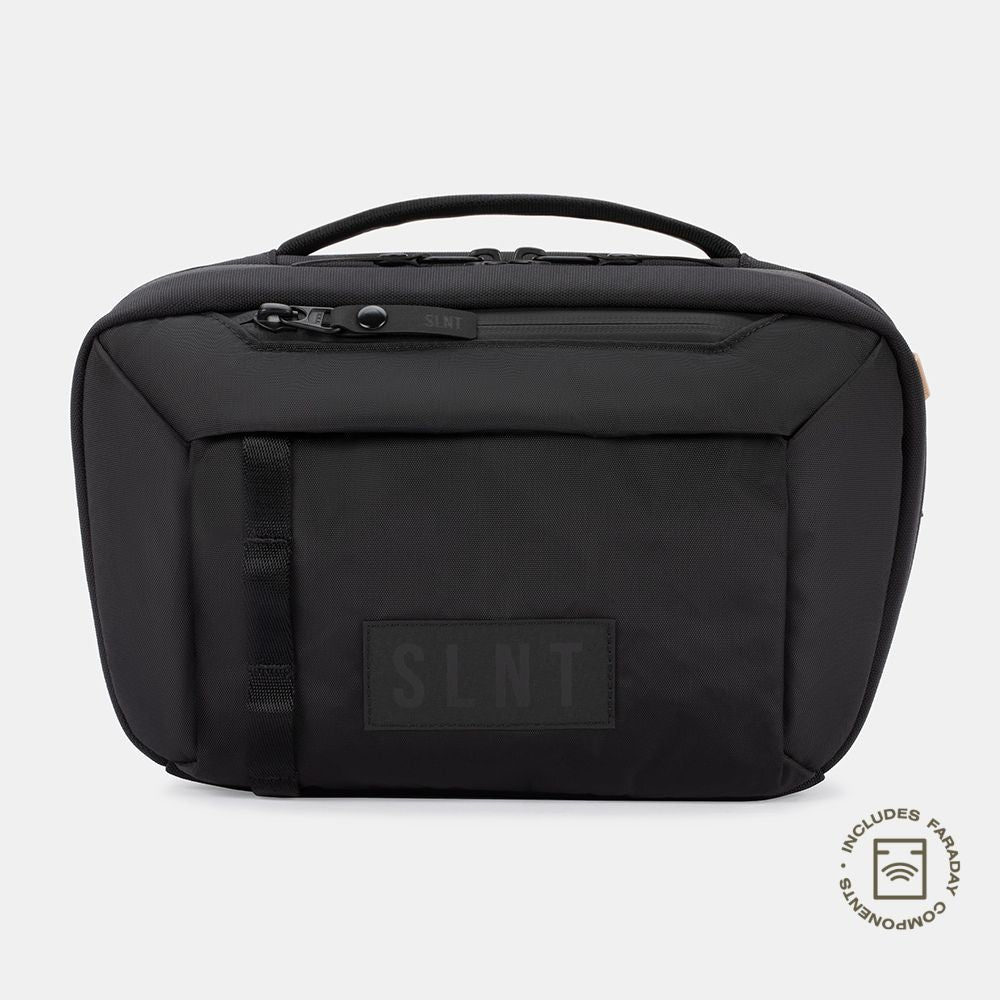
SLNT builds this protection into everyday carry, using patented Faraday technology, independently tested, and originally developed for military and special operations environments before moving into civilian and professional use.
What digital hygiene looks like in real life
It shows up in quiet, intentional moments, not dramatic ones.
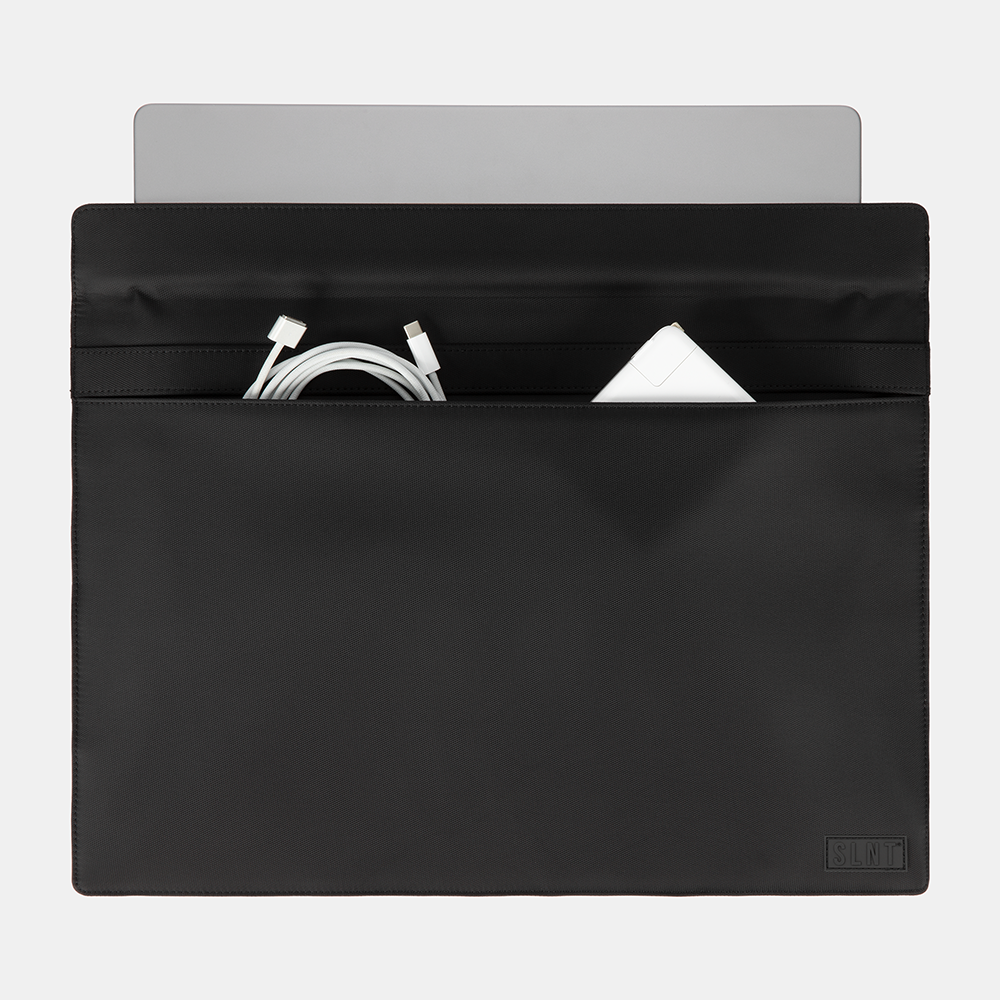
On a work trip, a phone goes into a Faraday sleeve during flights, border crossings, or ride shares. No background pings. No passive location trail.
During meetings where sensitive strategy is discussed, devices rest inside a Faraday bag instead of face-down on the table. Conversations stay in the room.
On daily commutes, laptops and tablets ride in signal-blocking backpacks or briefcases, eliminating exposure on public transit and shared WiFi zones.
In vehicles, key fobs are stored in Faraday pouches to prevent relay attacks that target modern cars.
At home or in a hotel, unused devices are placed in Faraday sleeves overnight, stopping unnecessary transmission and reducing constant digital noise during rest hours.
For professionals managing crypto assets or confidential data, hardware wallets and backup devices stay shielded when not actively in use, offline by default and not by hope.
None of this disrupts productivity. It simply draws clear boundaries.
What is digital hygiene?
Digital hygiene is the practice of controlling how, when, and where your devices transmit data.
At a practical level, it includes:
-
Limiting unnecessary wireless communication
-
Reducing exposure during travel, meetings, and downtime
-
Using physical signal control alongside software tools
-
Treating devices like sensitive equipment, not accessories
Good hygiene isn’t extreme. It’s intentional.
Why digital hygiene matters
Privacy isn’t secrecy.
It’scontrol.
For security-conscious professionals, digital hygiene protects more than data. It protects:
-
Autonomy: choosing when devices connect and when they don’t
-
Operational clarity: fewer distractions, fewer unknowns
-
Security posture: reduced exposure without constant configuration
-
Mental focus: silence where there used to be noise
For those mindful of EMF exposure, reduced transmission while devices are shielded is an added benefit but it’s secondary. The primary value is control.
This is why physical solutions matter. The Federal Trade Commission has consistently warned that mobile tracking and data collection are often invisible to users and difficult to fully manage through settings alone. When signals are blocked, the risk surface shrinks.
The bottom line
Security-conscious professionals don’t wait for problems to prove a point. They set boundaries early.
Digital hygiene isn’t about opting out of modern life. It’s about deciding when you’re connected, and when you’re not. Physical signal control gives that decision real weight.
SLNT exists to make that choice simple, repeatable, and built into daily routines.
No noise. No drama. Just control.
Silence the chaos.
If you want to understand how physical signal protection fits into your workday, start by learning how Faraday protection works in real-world use.