
What Is RFID Blocking? A Plain-English Guide to How It Works
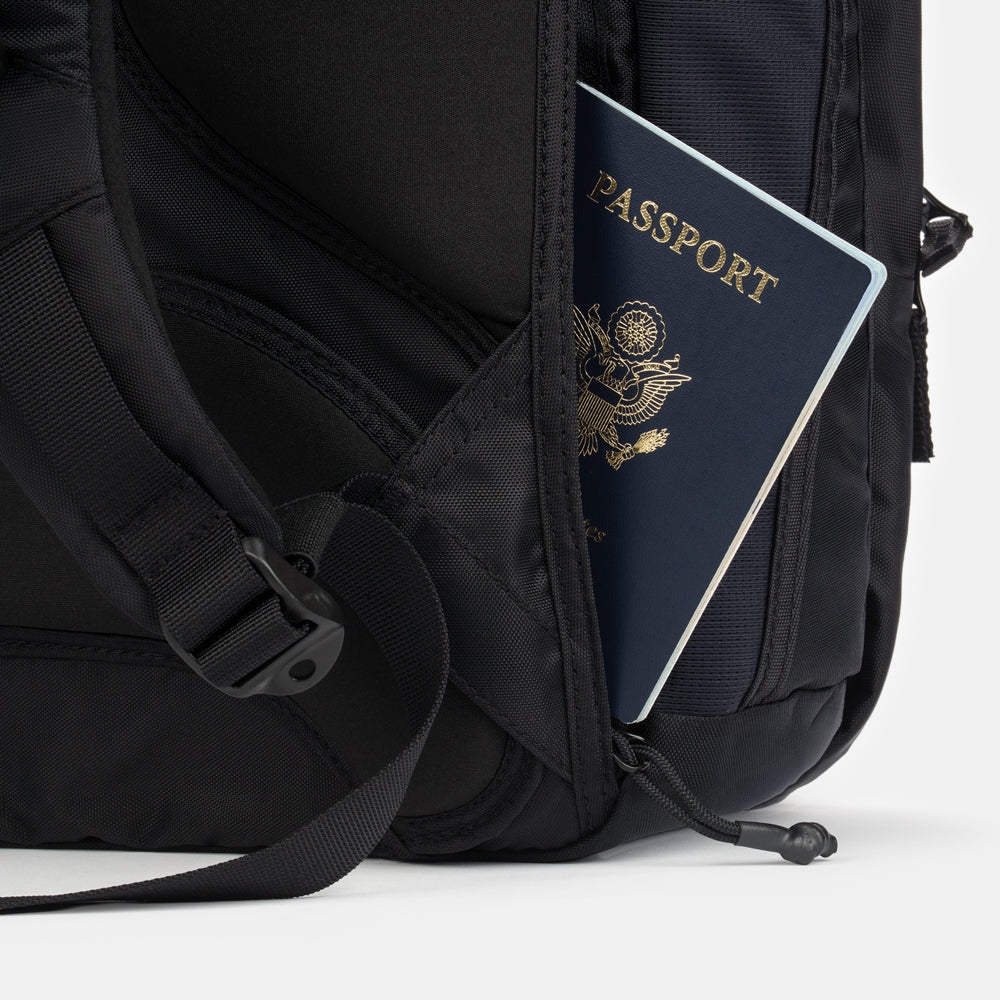

Tap your card. Badge into the office. Wave your passport at a kiosk. None of that requires you to touch anything, because a small radio chip is doing the talking for you.
That chip doesn't know who's listening.
What Is RFID, Actually?
RFID stands for radio-frequency identification. It's the technology inside contactless credit cards, passports, key fobs, transit passes, and office access badges. A small embedded chip transmits data over a short-range radio signal when it's close enough to a reader, no swipe, no insertion, no PIN required for the basic handshake.
That's the entire appeal. It's fast. It's convenient. It's also indiscriminate about who's asking.
RFID blocking is any material or enclosure that stops that chip from transmitting or receiving a signal. Wrap the card in the right shielding, and the reader gets nothing, not a wrong answer, just silence.
The Real Risk, Without the Hype
Let's be straight about this. Card issuers have added real protections over the years: tokenization, transaction limits, and PIN prompts on larger purchases. Wireless credit card skimming in the wild is less common than the early warnings made it sound.
But RFID isn't just on your credit card. It's in your passport. It's in the badge that gets you through your office door. It's in hotel keycards and some employee ID systems. Those don't always carry the same layers of protection a modern bank card does, and a cloned access badge or scanned passport chip is a very different problem than a declined charge.
So the risk isn't a single dramatic scenario. It's the sum of every RFID-enabled item in your pocket, each with a different level of built-in protection, all broadcasting to any reader in range that happens to be listening.
How RFID Blocking Actually Works
RFID blocking material is conductive. When it fully surrounds a chip, it creates what's called a Faraday cage, a barrier that absorbs and redirects radio waves so they can't pass through.
The short version:
-
An RFID chip sends a signal only when a reader powers it up at close range
-
A shielding material with enough conductive coverage blocks that signal from getting in or out
-
No signal reaches the chip, so the chip has nothing to respond with
-
The card, passport, or badge functions normally the moment it's removed from the shielding
This is a physical barrier, not a digital setting. There's no software to update and nothing to configure. Either the shielding fully encloses the chip or it doesn't. That's why coverage and construction matter more than a "RFID blocking" label on a package.
Where This Shows Up in Daily Life
You don't need to overhaul how you carry things. You need the shielding in the right spot.
Your everyday wallet. Cards and badges sit against shielding all day without you thinking about it, the same way a good wallet should work. A Faraday-lined wallet handles this without changing how you use it.
Travel days. Passports and boarding passes increasingly carry embedded chips. Between the airport, the hotel, and the rental counter, a shielded travel pouch keeps every chip you're carrying off any reader you didn't approach yourself.
Commuting with an access badge. If your badge gets you into a building, it's worth treating like a key, not a sticker on your lanyard. Keeping it shielded when you're not badging in closes an easy cloning window.
Hotel keycards. Most hotel keys use the same short-range chip technology as access badges. Tossing it in a shielded pocket when you're not using it costs nothing and closes the gap.
Key fobs for vehicles. Modern fobs constantly emit a low-power signal your car listens for. Relay attacks exploit exactly that. A Faraday key fob pouch stops the fob from broadcasting when it's parked at home or in a bag.
Carrying a work badge and a hardware wallet together. For anyone managing crypto custody alongside a day job, a single shielded organizer can cover both an access badge and an NFC-enabled hardware wallet without needing two separate solutions.
None of this requires a mindset shift. It's a five-second habit, the same as putting your keys in the same bowl by the door.
One Thing This Doesn't Do
RFID and Faraday shielding block radio signals. They do not disable a device's built-in microphone. If a phone or other electronic device is inside a shielded sleeve or bag, its mic is separate hardware and stays functional regardless of signal blocking.
It's also worth being precise about scope. RFID blocking stops chip-based scanning and skimming. It doesn't make a card, passport, or phone invisible to every kind of surveillance, and it isn't a claim that anything sealed inside becomes untraceable in every sense. It solves the radio signal problem, and it solves it well.
Why It Matters
This comes down to a simple idea: your cards, your badge, your passport, and your keys shouldn't be answering questions you didn't ask them to answer. RFID blocking doesn't change how any of those items work for you. It just makes sure they only respond when you intend them to.
There's also a quieter benefit. Once shielding is part of your daily carry, you stop having to think about it at all. That's the whole point of a physical fix over a habit you have to remember every time.
SLNT's Faraday-lined gear is built on patented shielding technology, independently tested to exceed MIL-STD-188-125-2, a benchmark originally used to certify equipment for military environments. For more on the underlying technology, Wikipedia's overview of RFID is a solid, neutral starting point.
Close It Out
You don't need to overthink this. You need the right material between your chip and whoever's reader is nearby. That's it. That's the whole mechanism.
Take a look at SLNT's Faraday wallets and bags and see what's worth shielding in your own daily carry.