
What Is an IMSI Catcher (Stingray) and Can You Block One?

Your phone connects to whatever tower shouts the loudest. It doesn't check ID first.
That one design quirk is the entire reason IMSI catchers work.
What Is an IMSI Catcher?
An IMSI catcher, also called a Stingray or cell-site simulator, is a device that impersonates a real cell tower. Phones nearby connect to it automatically, the same way they'd connect to any legitimate tower, because that's simply how cellular networks are built to behave.
-
It logs the IMSI, a unique identifier tied to your SIM card
-
It can pinpoint a phone's location with more precision than a carrier normally provides
-
Some versions can intercept calls, texts, or force a phone onto an older, less secure network
-
It sweeps up every phone in range, not just one target
These devices have been used by law enforcement, government agencies, and in some documented cases, private actors with the right hardware. You don't need to be a suspect in anything for your phone to connect to one. You just need to be nearby.
The Problem: You Can't Tell When It's Happening
Here's the uncomfortable part. There's no reliable warning. Your phone doesn't know the difference between a real tower and a fake one, so it won't tell you either. A handful of detection apps exist, but even security researchers who study this space say they're inconsistent at best.
That's not a reason to panic. It's a reason to stop relying on your phone to protect itself from a problem it isn't built to notice.
The Solution: Cut the Connection at the Hardware Level
Software can't fix this. A VPN encrypts your traffic, but it does nothing to stop your phone from handshaking with a fake tower in the first place. Airplane mode helps, but people forget to use it, and some phones still ping briefly on wake.
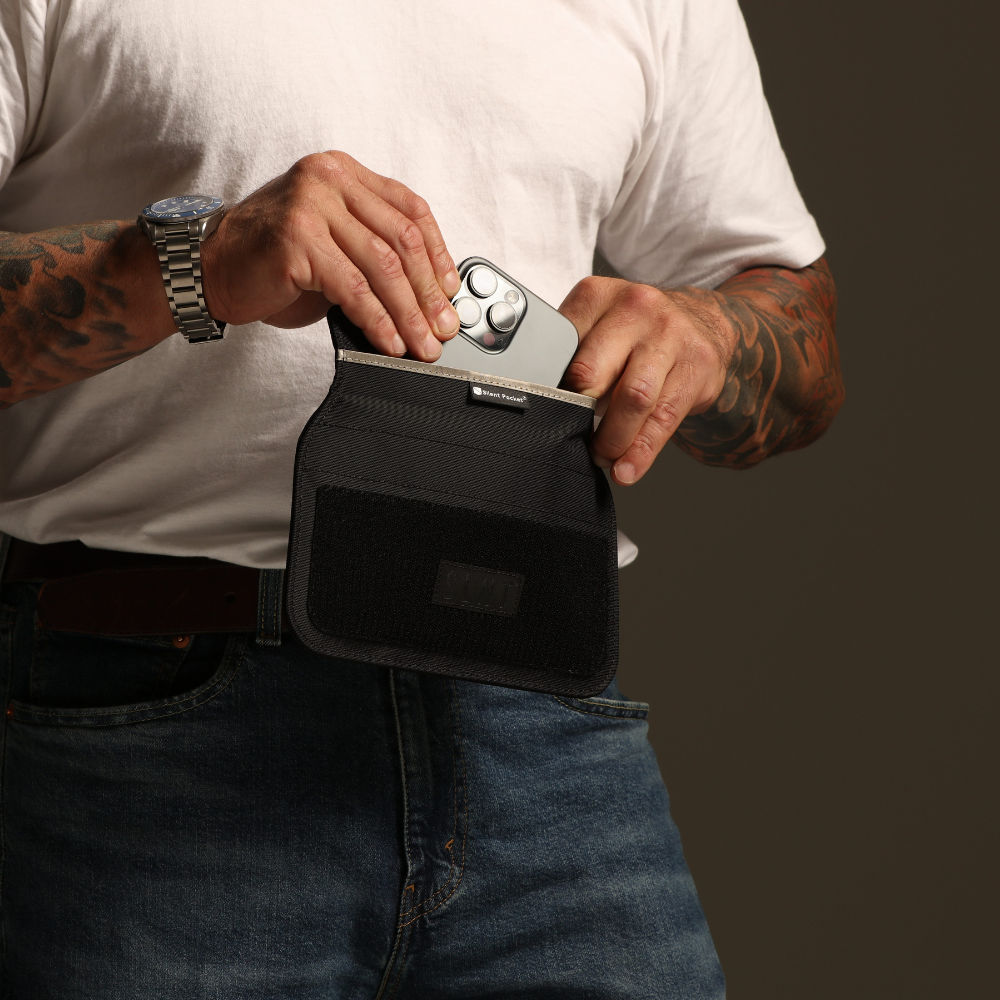
A Faraday enclosure solves it differently. Instead of trying to detect a fake tower or filter bad connections, it blocks the phone from transmitting or receiving any cellular signal at all. No signal in. No signal out. If the phone can't talk to any tower, real or fake, there's nothing for an IMSI catcher to catch.
This is a physical fix, not a digital one. The shielding material in the bag or sleeve creates a barrier the signal simply can't cross. It doesn't rely on trust, updates, or settings you might forget to check.
Where This Actually Comes Up
You don't need to live off-grid to have a reasonable use for this.
At protests or public demonstrations. IMSI catchers have a documented history of deployment at large gatherings. A sealed Faraday phone sleeve means your location and device ID aren't part of the sweep.
Crossing a border or attending a sensitive meeting. Journalists, attorneys, and business travelers carrying confidential material sometimes want a hard guarantee that a device isn't reachable, not just a setting that claims it is.
Working near a courthouse or government facility. Some agencies operate cell-site simulators in fixed locations. If your phone doesn't need to be connected during that window, sealing it removes the question entirely.
During confidential meetings or negotiations. Anyone in the room with a live phone is a potential access point. A shielded Faraday bag keeps every device in the room fully dark for the duration.
Commuting through a dense downtown corridor. Cell-site simulators aren't only deployed at events. Anyone who wants their daily route to stop being a location trail can seal their phone between calls.
Digital-detox windows at home. Even without a specific threat, some people just want a clean, hardware-enforced break from being reachable. Sealing the phone removes the temptation to check it.
None of this requires a new routine. It just means the phone goes in a shielded case instead of a regular pocket when it doesn't need to be transmitting.
One Thing This Doesn't Do
Faraday shielding blocks wireless signal. It does not disable a device's built-in microphone. A phone's mic is separate hardware and stays functional whether the phone can transmit or not. If you need audio privacy in a specific moment, that's a different problem from signal blocking, and it's worth treating it as one.
It's also worth being direct about scope. Blocking cellular signal stops an IMSI catcher from reaching that specific device while it's sealed. It doesn't erase other forms of surveillance, like a camera on the street or a record made before the phone went into the bag. Signal isolation solves the signal problem. It's not a claim to disappear from every kind of observation.
Why It Matters
This isn't about having something to hide. It's about deciding when your device gets to answer and when it doesn't. Right now, your phone answers automatically, to any tower, any time, without asking you first. Sealing it when you don't need it live is a small act of putting that decision back where it belongs, with you.
There's a mental clarity to it too. Knowing a device is fully offline, not just quiet, removes a layer of background noise most people don't realize they're carrying.
SLNT's Faraday shielding is built on patented technology, independently tested to exceed MIL-STD-188-125-2, the same benchmark used for equipment fielded in military environments. It's a testing bar that doesn't bend for marketing copy.
For a deeper technical breakdown of how cell-site simulators operate and where they've been documented in use, the Electronic Frontier Foundation's Street-Level Surveillance project is one of the most thorough public resources available.
Close It Out
Your phone was built to trust the strongest signal in the room. That's convenient right up until it isn't. You don't need to throw the phone away or live disconnected to fix that. You just need a way to decide, on your own terms, when it's actually listening.
Take a look at SLNT's Faraday bags and sleeves and see where a hardware-level off switch fits into your day.