
How Crypto Traders Integrate Faraday Protection Into Cold Storage Workflows
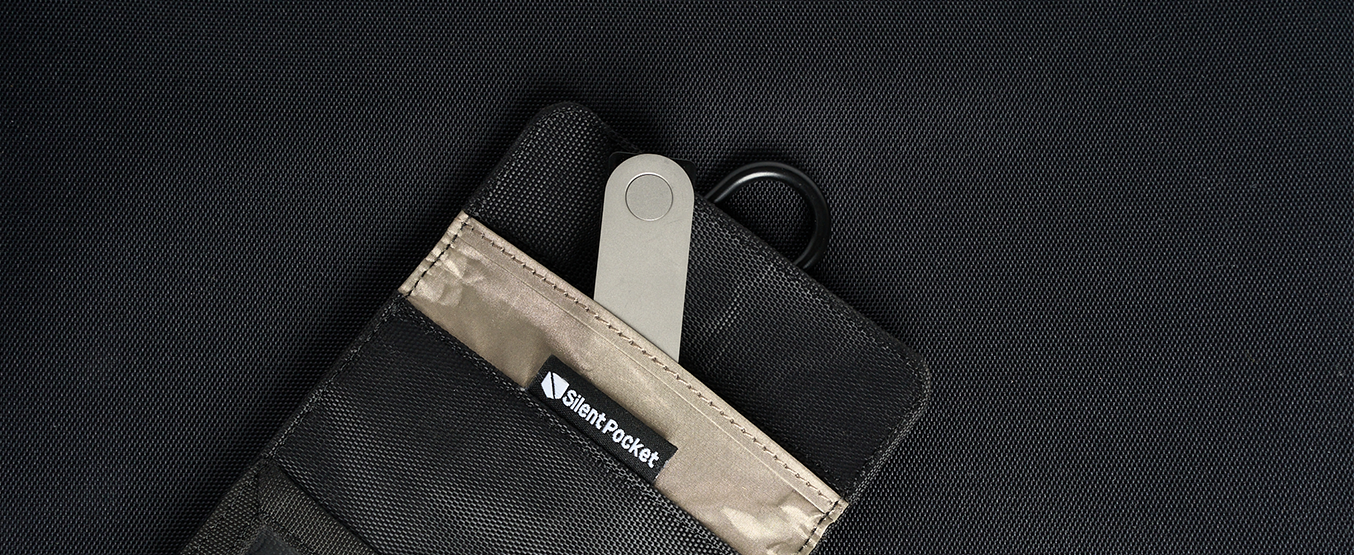

Your seed phrase is only as safe as the weakest link in your setup. Most people obsess over the strong password and forget the wallet sitting on a shelf, still broadcasting a signal to anyone close enough to listen.
That's the gap. And it's an easy one to close.
The Problem: Cold Storage Isn't as Cold as You Think
"Cold storage" means the keys never touch the internet. That's the theory. In practice, most hardware wallets still have Bluetooth, NFC, or a chip that can be interrogated at close range. Sitting in a drawer, that device is technically offline. It's not technically silent.
Add to that the physical risks nobody talks about: RFID skimming at a conference, a hotel room search while you're at dinner, a "random" customs stop at the border with your hardware wallet in your carry-on. None of that requires your device to be connected to Wi-Fi. It just requires proximity.
Software can't fix a proximity problem. A VPN doesn't stop someone from scanning a chip six inches away. A strong PIN doesn't stop a customs agent from photographing your seed phrase card. These are physical exposure points, and they need a physical fix.
The Solution: Physical Signal Isolation, Not Another App
What is a Faraday bag for crypto storage?
A Faraday bag is a shielded enclosure, built with conductive material, that blocks all wireless signals in and out, including RFID, NFC, Bluetooth, cellular, and GPS. Put a hardware wallet, seed phrase backup, or access card inside, and it goes fully dark. No pings. No scans. No signal, period.
This isn't a setting you toggle or an app you trust to behave. It's hardware-level enforcement. The signal is physically blocked, not politely asked to stop.
That distinction matters more in crypto than almost anywhere else. Your keys are the whole game. If someone gets them, there's no fraud department to call and no transaction to reverse. Physical control of your keys should get a physical level of protection.
Where This Fits Into a Real Cold Storage Workflow
You don't need to rebuild your setup. You need to close the gaps in the one you already have.
At home, between transactions. Your hardware wallet sits idle most of the time. That's exactly when it should be sealed, not just powered off. A Faraday-lined wallet and organizer keeps the device and any card-based backups shielded until you actually need them.
Seed phrase backups. Whether it's a steel plate, a card, or a written copy, a seed phrase backup is often stored next to the very device it protects. If that space isn't shielded, you've built a single point of failure. Store both inside a Faraday enclosure and you remove the passive scanning risk entirely.
Traveling with a hardware wallet. Airports, hotels, and border crossings are not neutral ground. A signal-blocking sleeve means your wallet can't be scanned in a bag, on a nightstand, or in a checked case. It travels the way it should: silent.
Multi-sig setups with multiple devices. If your security model depends on keeping signing devices physically separate, a Faraday pouch for each one adds a layer that logical separation alone can't guarantee. Isolation on paper is not the same as isolation in practice.
Conferences and meetups. Crypto events are exactly where RFID skimmers and rogue access points show up. If you're carrying a hardware wallet or an access badge, a shieldedphone sleeve or bag keeps it off the radar while you're in a room full of unknowns.
Long-term storage. For keys you're not touching for months, a sealed Faraday case removes any question about whether that "offline" device is actually staying offline.
None of this is about paranoia. It's about matching your physical security to the value of what you're protecting. Nobody would leave a hardware wallet on a park bench. Leaving it broadcasting a signal isn't much different, it's just harder to see.
One Thing This Doesn't Do
Faraday shielding blocks wireless signal. It does not disable a device's built-in microphone. If a device has a mic, that mic is part of its hardware and stays functional regardless of signal blocking. If audio privacy matters in a specific situation, that's a separate consideration from signal isolation.
Why It Matters
Crypto rewards people who take custody seriously. Self-custody was never just about holding your own keys, it was about controlling every point where those keys could be exposed. A hardware wallet that's cryptographically secure but sitting unshielded on a desk still has an exposure point. Closing it isn't extra credit. It's part of the job.
There's a mental side to this too. Knowing your setup is actually sealed, not just assumed to be, is one less thing running in the background of your head. That's not a small thing when the stakes are your own money.
SLNT's Faraday gear is built on patented shielding technology tested to exceed MIL-STD-188-125-2, the same standard used to certify equipment for military environments. It's the kind of testing bar that doesn't care whether you believe the marketing. It either blocks the signal or it doesn't.
If you want the mechanics of how RFID skimming actually works, from scanner range to what a criminal can and can't pull off a card at a distance, this overview breaks it down without the hype.
Close It Out
You already take custody seriously enough to hold your own keys. Sealing the physical gaps around them is the same instinct, just extended one step further. It's not a bigger workflow. It's a tighter one.
If your cold storage setup has a wallet sitting exposed on a shelf, that's worth a five-minute fix. Take a look at SLNT's Faraday bags and wallets and decide for yourself what belongs behind a signal-proof wall.