How Advertisers Build a Profile on You (And Target You With It)


You walk into a store. You don't buy anything. You leave.
Two hours later, you're scrolling Instagram and the same product is staring back at you.
That's not a coincidence. That's a profile. And it's been building in the background for years.
You're the Source File
Every phone you carry, every app you open, every WiFi network you walk past leaves a trail. Advertisers don't have to guess who you are. They build it from data you produce just by existing.
Here's how the profile gets stitched together.
How the Profile Gets Built
-
Mobile Advertising ID. Every phone has one. It's a unique tag that follows you across apps and ad networks.
-
Location data. Your phone reports its position to apps, ad networks, and your carrier all day. Where you live. Where you work. Where you sleep. Where you don't.
-
WiFi probe requests. Even when you're not connected, your phone broadcasts a list of networks it's looking for. Retailers and ad-tech firms log it.
-
Bluetooth beacons. Stores, airports, and stadiums place beacons that talk to your phone silently. They know exactly where you stood and for how long.
-
App permissions. Once granted, apps quietly send back contacts, photos, microphone usage, and behavioral patterns.
-
Data brokers. They buy from all of the above and sell complete profiles to anyone with a budget.
By the time an ad reaches you, hundreds of companies have already bid on your attention in real time, using a profile they built without asking.
From Profile to Product
This isn't only about ads. It's about decisions made about you, without you.
The profile decides what price you see for a flight, a hotel, a rideshare. It decides which job posts find your feed. It decides which political messages reach you. It can shape what your insurance might cost.
You don't see the version of the internet other people see. You see the version your profile earned.
Targeted ads are the visible piece. Targeted reality is the rest.
The Physical Layer of Privacy
Most advice on this topic stops at "change your settings."
Settings help. They don't stop the signal. Your phone can still ping cell towers, broadcast WiFi probes, and respond to Bluetooth beacons even when location services are off, even when you've opted out, even when you think the device is asleep.
To actually cut the feed, you have to cut the signal.
That's where Faraday gear comes in.
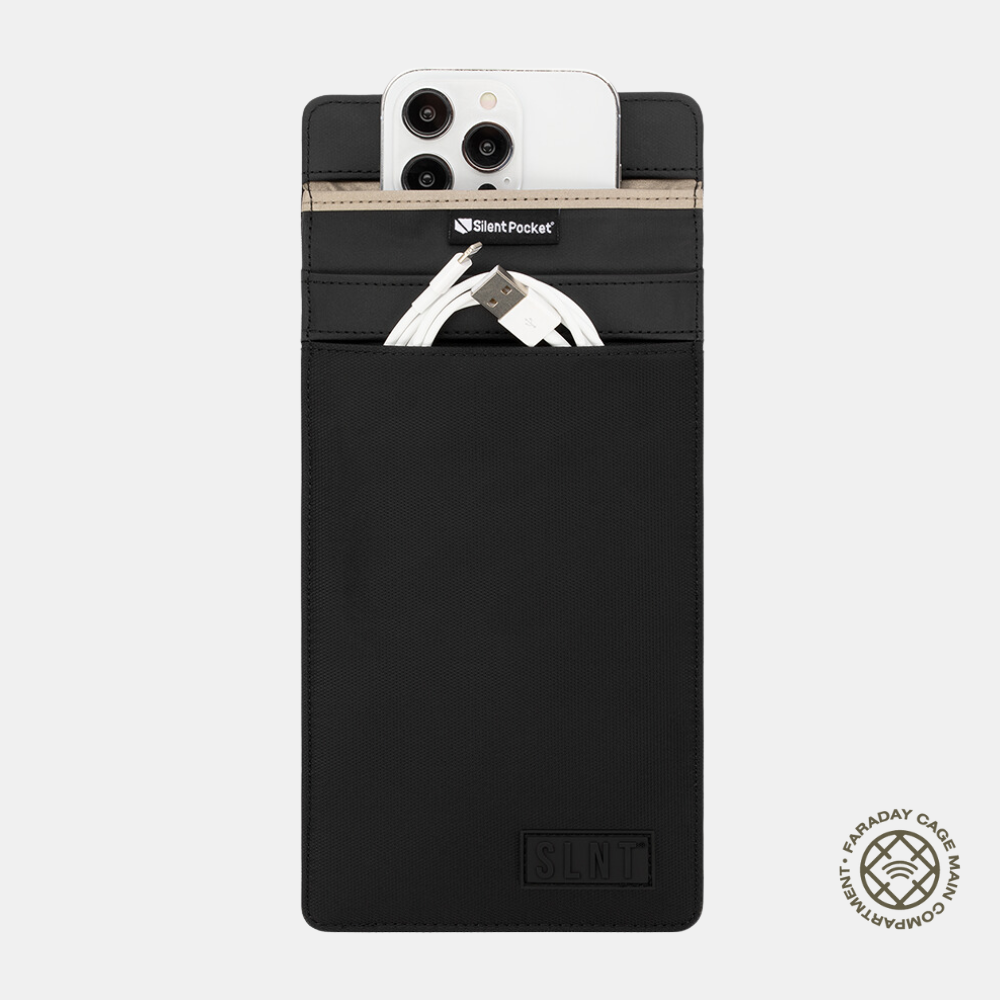
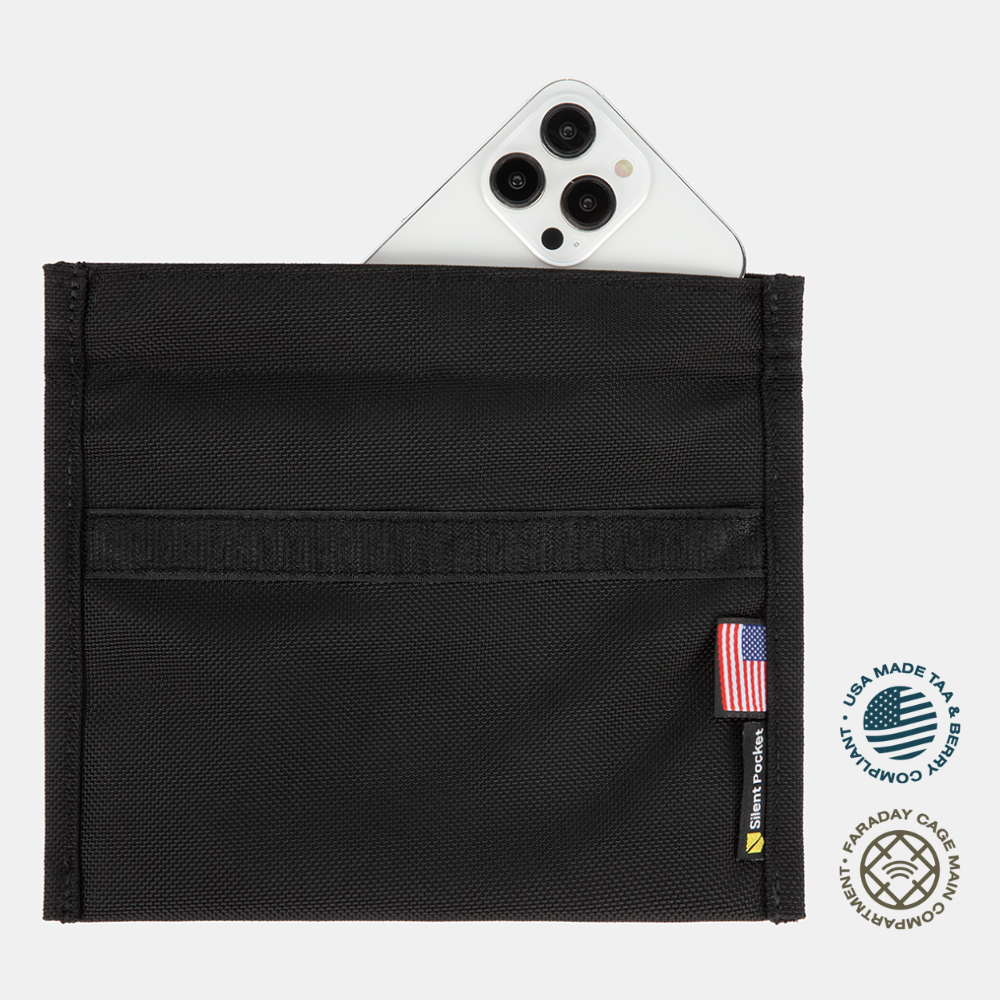
Quick definition: A Faraday bag is a physical, signal-blocking enclosure. It uses conductive material to block all wireless signals, cellular, WiFi, Bluetooth, GPS, RFID, NFC, to and from any device sealed inside.
When a phone is sealed in Faraday gear, it goes dark on every band. No cell tower handshake. No WiFi probe. No Bluetooth ping. No GPS broadcast. The device cannot feed the profile while it's in the bag.
Two things to be straight about.
A Faraday bag doesnot block the microphone, because the mic is built into the device.
Faraday gear also doesn't erase what's already on file. It cuts off the live feed. It doesn't delete history. It's a physical layer in your privacy stack, not the entire stack.
SLNT's gear is patented, independently tested, and built to standards originally developed for Special Operations. The same engineering now sits in commuter backpacks, executive offices, and family kitchens.
Where This Fits in Real Life
Drop your phone in a Faraday phone sleeve when you walk into a mall. The retail beacons can't talk to it. Your visit doesn't get logged, modeled, and resold by closing time.
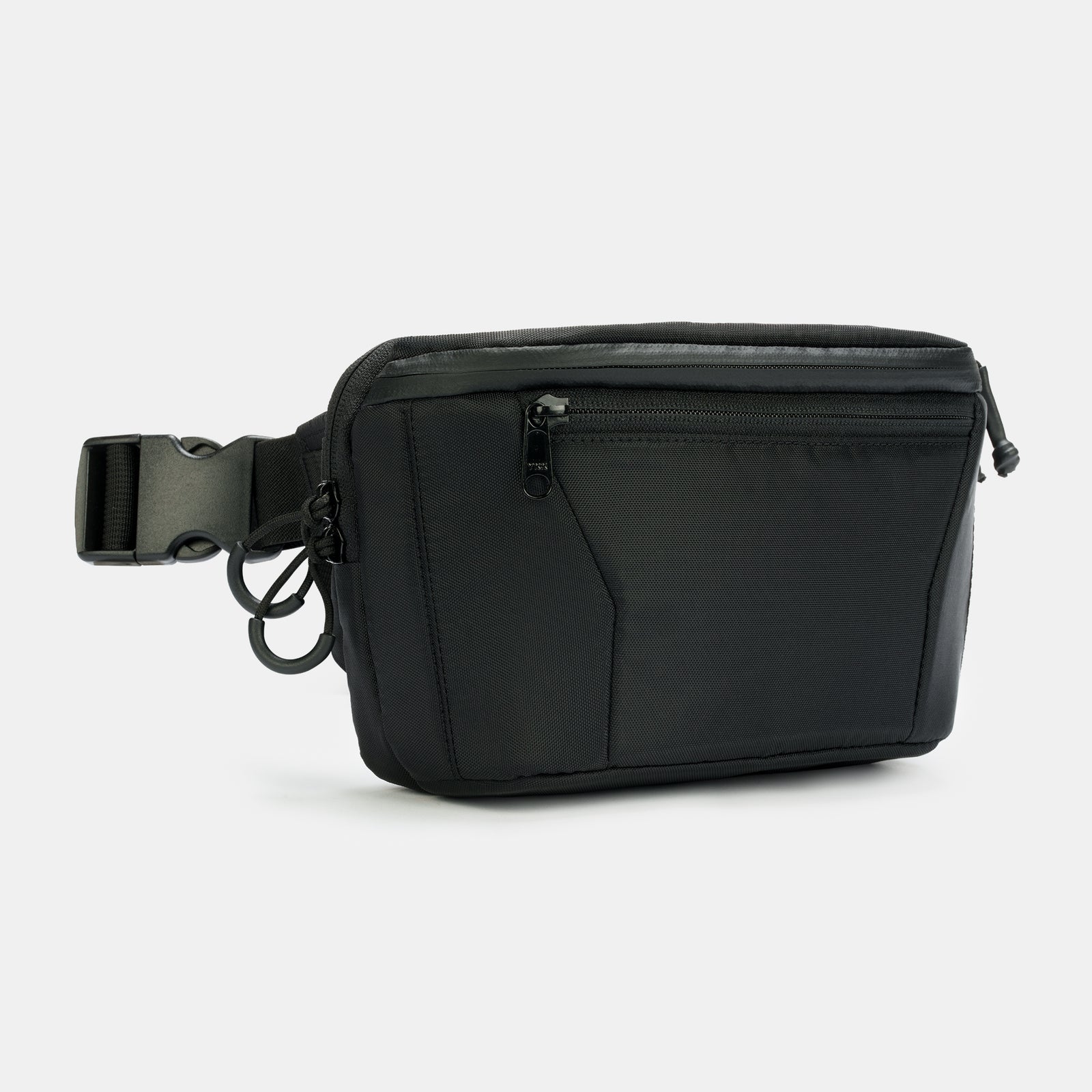
Use one on your daily commute. The phone stops handing your route to every app with location permissions. The trail breaks.
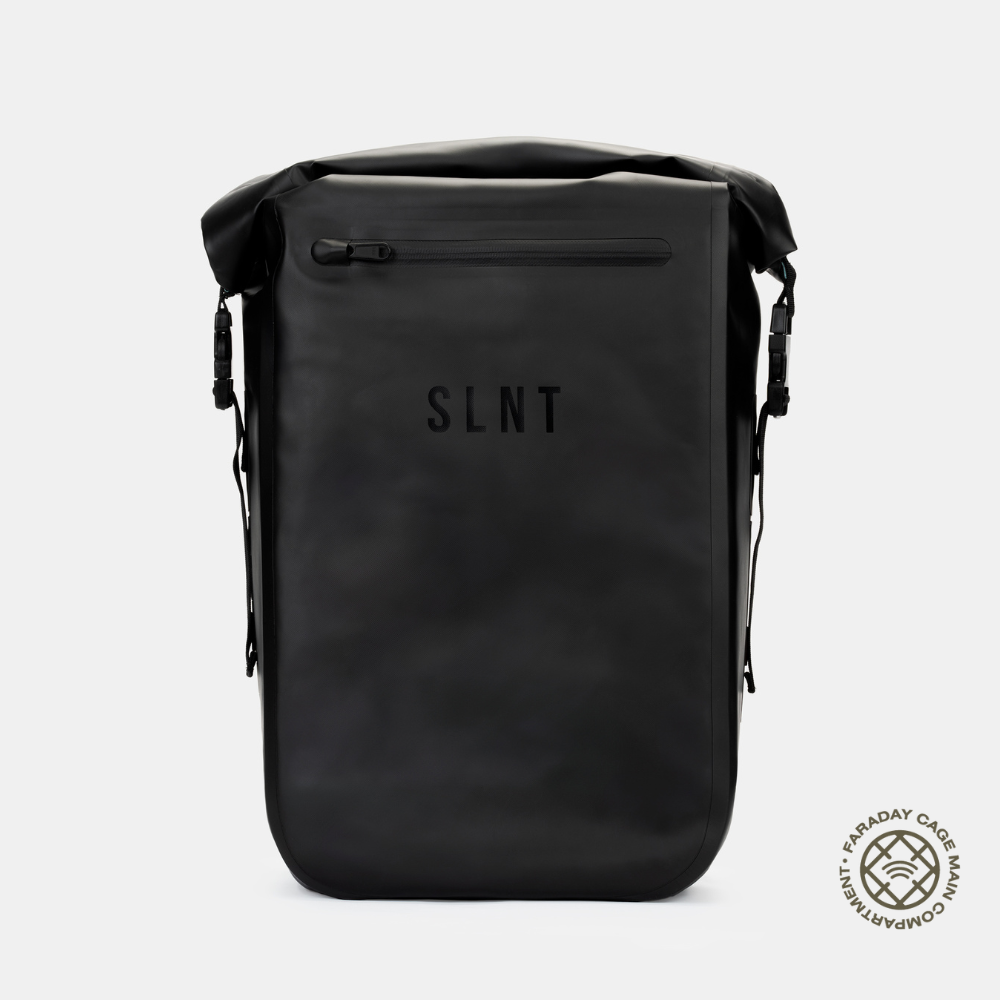
Throw a Faraday backpack on for travel. Airports are some of the densest tracking environments on earth, Bluetooth beacons, captive WiFi, ad-tech across every gate. Sealed gear cuts that off until you choose to reconnect.
Use one for kids during family time. Phones go in the pouch. Profiles stop building during the hours that should belong to the people in front of you.
Why This Actually Matters
A profile is just data. The problem is what gets done with it.
Pricing changes based on it. Decisions get made because of it. Messages reach you, or don't, depending on what it says. The Federal Trade Commission has flagged the data broker industry for years, and the picture they describe is consistent: detailed dossiers built from the daily exhaust of normal life, sold to whoever pays.
You can't argue with a profile you can't see. What you can do is shrink the data feeding it.
That's what Faraday does. Not because privacy is a luxury, but because attention, movement, and access are the things that actually belong to you.
Take the Signal Back
You're not buying a bag. You're choosing when the world gets access to you.
The profile won't stop building on its own. Settings won't stop it. The only thing that stops the live feed is the physical barrier.
Explore SLNT's Faraday gear and decide where the line gets drawn.
The chaos doesn't quiet itself.
You silence it.