How SLNT protects sensitive meetings: best practices for executives


You wouldn’t leave the boardroom door open during a confidential meeting.
Yet most meetings start with a dozen microphones, radios, and tracking devices sitting face-up on the table.
Phones. Laptops. Tablets. Key fobs. All powered on. All broadcasting.
That’s the modern meeting.
The Problem: Meetings Are No Longer Private by Default
Executives operate in environments where information is leverage. Strategy. M&A. Legal exposure. Personnel decisions. One leak changes outcomes.
The issue is not bad actors in the room.
The issue is devices.
Modern devices constantly transmit signals: cellular, WiFi, Bluetooth, GPS, RFID, NFC. Even when screens are off. Even when apps are closed.
That creates real exposure:
-
Location data tied to attendance and patterns
-
Bluetooth discovery revealing who was nearby
-
WiFi probing that identifies networks and behavior
-
Credential leakage through background connections
-
Metadata that maps relationships, timing, and movement
Software controls help. Policies help. Airplane mode helps a little.
But as long as a device can transmit, it can leak.
The Solution: Physical Signal Control
Faraday protection solves this at the source.
A Faraday enclosure physically blocks wireless signals from entering or leaving a device. No cellular. No WiFi. No Bluetooth. No GPS. No RFID or NFC.
This is hardware-level control.
Not an app. Not a setting. Not a policy reminder.
When a device is placed inside a Faraday sleeve or bag, it stops communicating wirelessly. Period.
Important clarification: Faraday products do not stop the microphone itself. The microphone is built into the device. What Faraday protection does stop is the wireless transmission of any recorded audio, data, or location while the device is shielded.
That distinction matters. And it’s often misunderstood.
What “Faraday Protection” Means
Faraday protection is a physical enclosure that blocks wireless signals by design.
-
Prevents devices from sending or receiving signals
-
Blocks cellular, WiFi, Bluetooth, GPS, RFID, and NFC
-
Works regardless of operating system or settings
-
Requires no software, power, or updates
Once shielded, the device is digitally silent.
How This Fits Into Executive Life
Sensitive meetings don’t only happen in boardrooms.
They happen in transit, on site, and between stops.
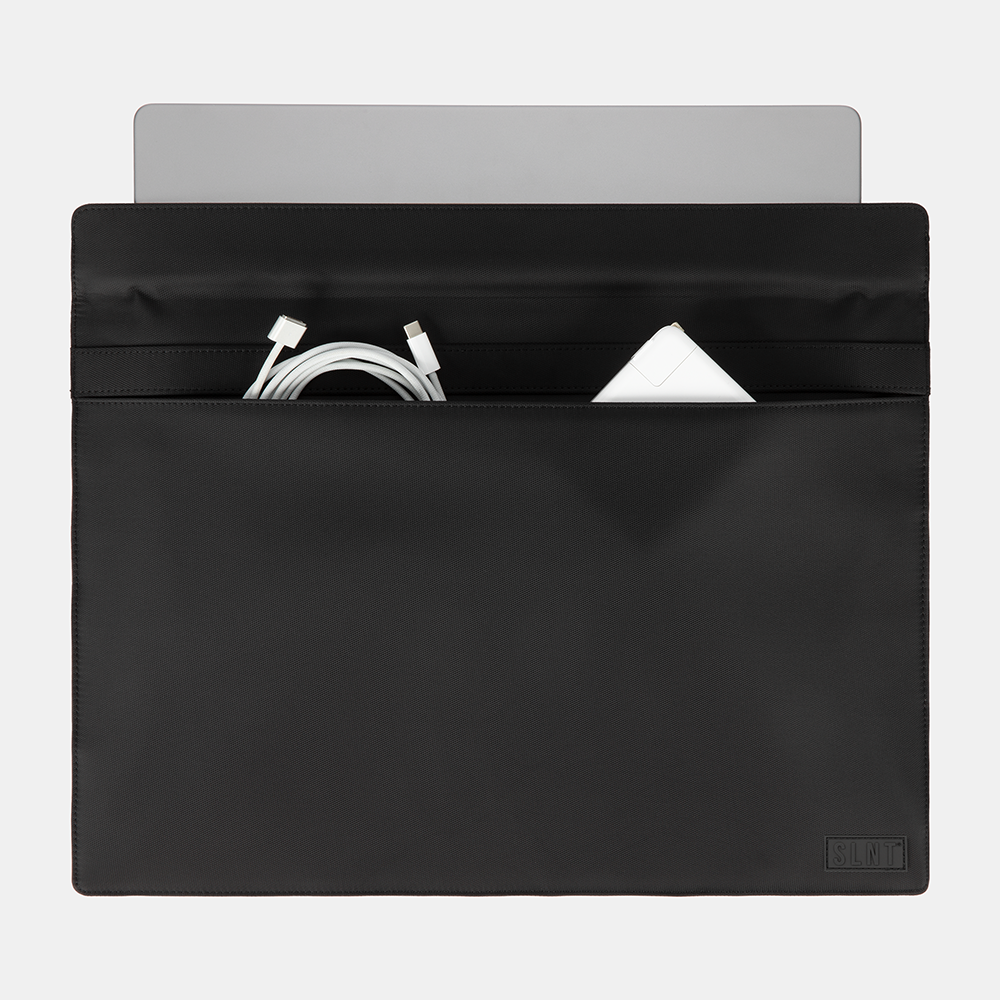
A slim Faraday sleeve dropped into a briefcase during a leadership offsite prevents passive Bluetooth and WiFi exposure while discussions happen in person. No ceremony. No disruption.
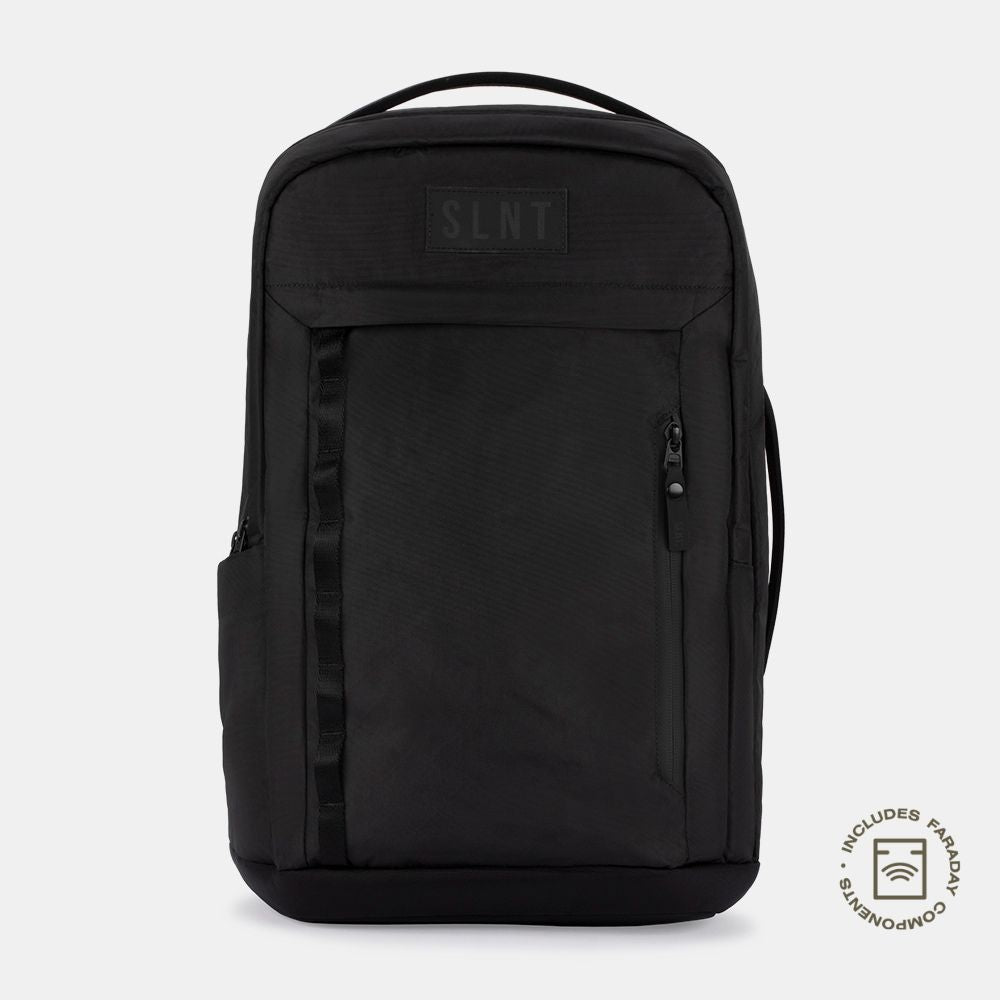
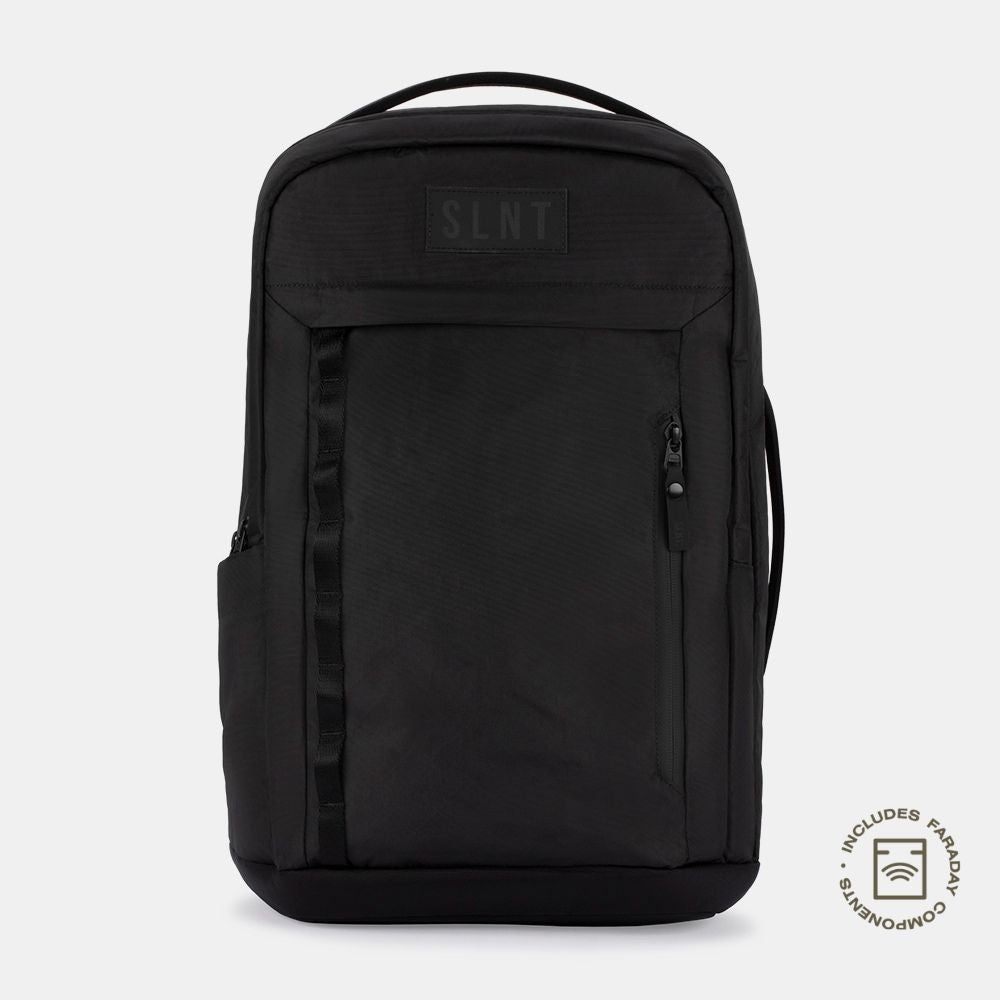
During travel, executives often carry confidential materials in airports, cars, and hotels. A Faraday backpack compartment keeps devices from broadcasting location data while still allowing easy access when needed.
In hybrid work environments, phones placed into a table-side Faraday pouch during closed-door strategy sessions reduce digital leakage without asking participants to surrender devices.
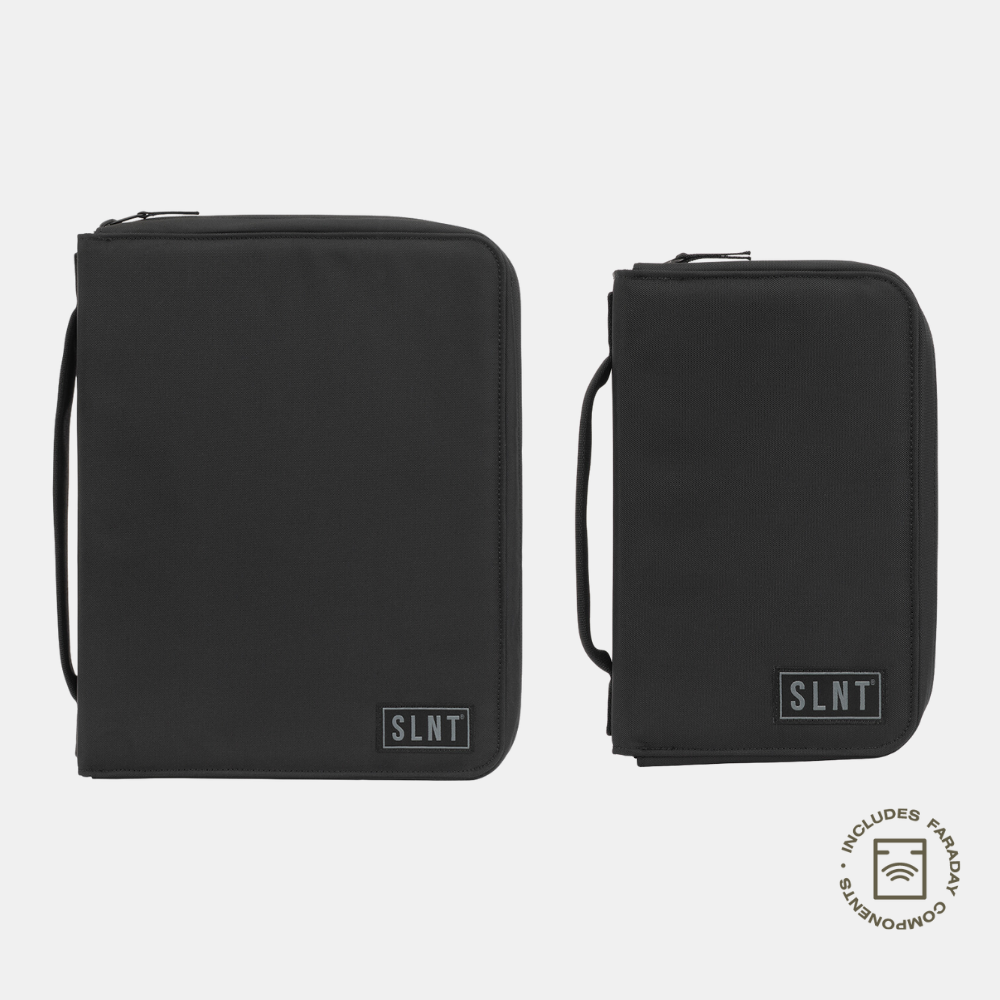
For legal teams, M&A advisors, and executive assistants handling multiple devices, Faraday organizers keep unused phones and tablets from transmitting in the background throughout the day.
Even key fobs matter. Executive vehicles are targets for relay attacks. Shielding keys during meetings and travel closes that door quietly.
None of this requires behavior change. It fits the way leaders already move.
Why This Matters at the Executive Level
Privacy is not secrecy.
It’s control.
For executives, control means:
-
Protecting strategic intent before announcements
-
Reducing digital exhaust that reveals patterns
-
Maintaining operational security during transitions
-
Creating mental clarity in rooms that matter
There’s also a secondary benefit worth noting. When devices are shielded, wireless exposure drops to zero while stored. For leaders who care about reducing unnecessary EMF exposure, Faraday protection supports that goal without making it the headline.
SLNT® gear is built with patented Faraday technology and independently tested to ensure consistent signal blocking. The same principles developed for military and government environments are now used in everyday business settings. That lineage matters when stakes are real.
Best Practices for Protecting Sensitive Meetings
Combine policy with physics:
-
Keep software permissions tight, but don’t rely on them alone
-
Designate device-shielding moments for closed meetings
-
Shield unused devices before arriving at the meeting, not after
-
Include key fobs, tablets, and secondary phones
-
Normalize physical signal control as standard protocol
The strongest security posture is quiet, consistent, and invisible.
The Bottom Line
If it’s broadcasting, it’s exposed.
Executives don’t need more tools. They need fewer leaks.
Faraday protection doesn’t replace judgment, leadership, or trust. It reinforces them by removing unnecessary risk from the room.
You decide when devices connect.
You decide when meetings stay contained.
That’s not paranoia. That’s preparation.
Silence the chaos.
If you want to understand how physical signal control fits into executive workflows, explore how SLNT Faraday protection works in real-world business environments.